A Beginner’s Street Photography Equipment List to Master the Art of Street Photography
Every great street photographer you look up to started from the same street you stand on. Street photography is a dynamic game. Shots don’t wait for you. So before you master this craft, you have to walk on the same roads the masters have walked on. From capturing street portraits to creating compositions and choosing the right gear, there is more to street photography than you think.
That’s why we have made an easy, go-to street photography checklist to bring you a little closer to mastering the art of street photography. So let’s just start with the basics.
What Is Street Photography?
Street photography is nothing but a fascination with composition, forms, geometry, lines, and shapes. A marriage between architecture, landscape, and abstractness.
In simpler terms, street photography is about capturing candid moments of humans on the streets. The challenge here is that a street portrait needs to feel like real-time streets frozen in a moment. So a street photographer’s job is to show an impassioned moment captured by their lens at the right time.
But the core definition of street photography may be limiting. Trying to define “what is street photography” is as difficult as explaining to someone what an orange is.
Is it a colour, or a fruit? You only understand what the other person is talking about when you actually see it yourself. An effective way to actually understand what street photography is, is to look at the work people have already done.
While you scan through their work, you will end up realising that there isn’t a single reticent picture on the folder, even if there is not a single subject in focus.
Street photography captures what the photographer witnessed on that street on that day. So the best way to master the craft of street photography is to hit the streets with your camera.
Before you go, don’t forget to carry the essentials.
Street Photography Equipment Checklist
Street photography is an art of finding the perfect angle to store stories from the streets. Sometimes, photographers intentionally manipulate their shots as a metaphor to tell a deeper tale. The best street photography ideas occur to you when you look at the work of professionals. But if you believe in executing those ideas on the ground, then you are a believer of a righteous path.
Just don’t forget to take these with you:
Camera
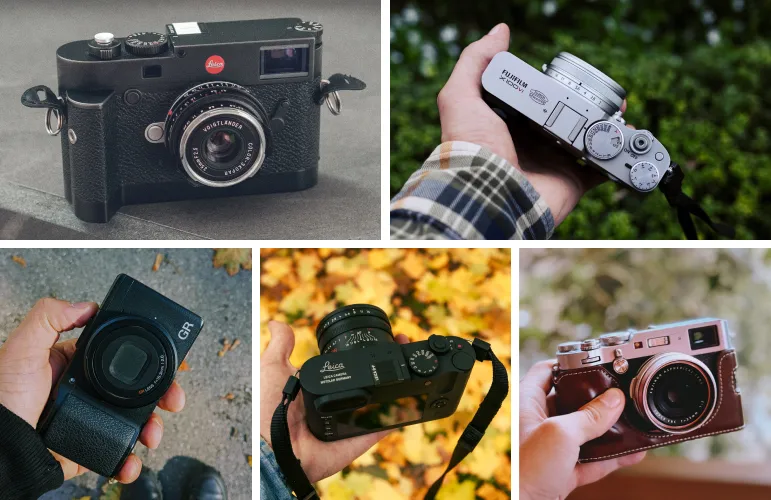
Without the right tools, a creator is helpless. First and foremost, and this goes without saying, you need a camera to start clicking on the streets. If you are thinking of something big and bulky, stop right here. In the midst of crowded streets, a heavy, bulky camera is of no use for taking photos. You need to be quick with every shot and need something you can grab easily, like a compact camera.
Manage your budget to buy a lightweight, manually controlled mirrorless camera or a DSLR. Surely, an expensive camera can take your results to another level. But street photography is about clicking the imperfect through street cinematography. You will be roaming on the streets, and an expensive and heavyweight camera can become your enemy.
Most new photographers go for Ricoh GR III, Fujifilm X100V, or Leica Q2.
If you are too new and don’t have a budget yet, you can still take out your mobile phone’s camera and point it at the street.
Lenses
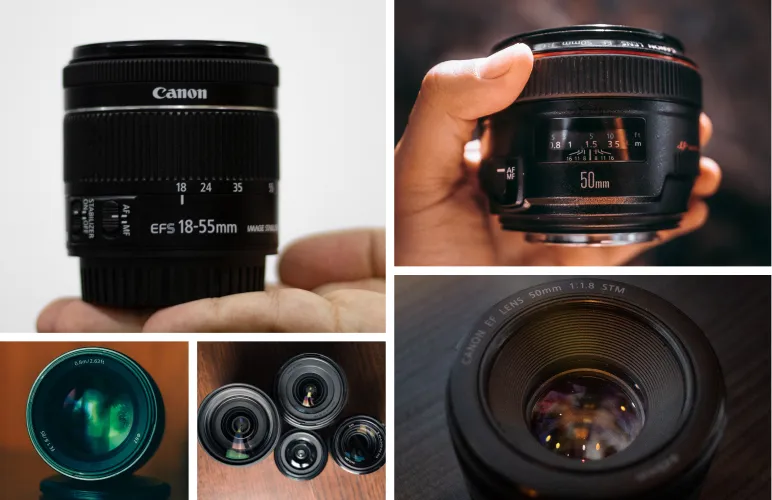
Are you a good juggler? Well, if you are, then you can take as many lenses as you can. But for most photographers, who can’t juggle expensive and fragile lenses in the midst of crowded passages and roads, it is better to go with a single lens for your camera and make it your primary lens for the whole day.
For taking absolute cinema and capturing street cinematography, the most obvious choices are 28mm, 35mm, or 40mm lenses. It all depends on what you have in mind that day.
You might want to go with wide-angle perspectives for some shots. In this case, you can think of carrying a 50mm lens. You can take one extra lens for wider perspectives and use a normal primary 35mm or 28mm lens for your street portraits.
A combination of 30mm and 50mm can give you a perspective similar to the human eye. This will also help you with low-light performance since their apertures are pretty wide.
But again, these lenses are expensive. So, unless you already have them, don’t buy gear with your eyes closed. Invest in just one primary lens, and it will turn out perfect.
Camera Strap
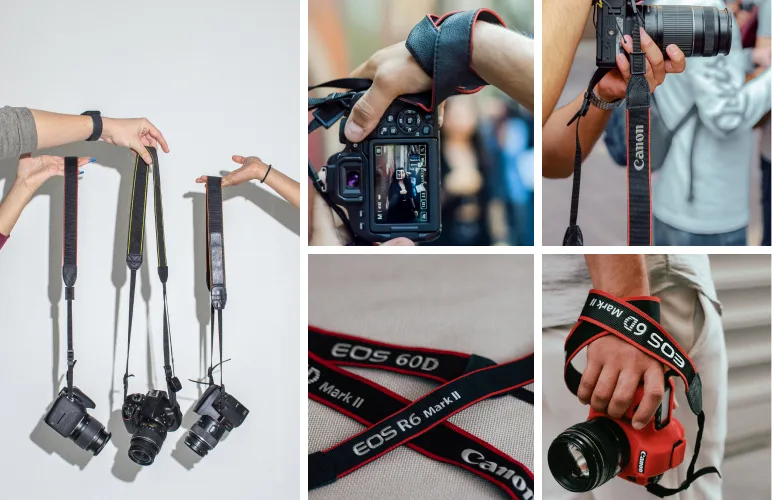
A camera strap was not something you were looking for on this list, but carrying one is a necessity. It acts like a safeguard for your camera and lenses. While you roam the streets, you might have moments when you need to turn around, run, walk, or even jump. A street photographer needs to be agile when capturing shots. It is good to have the freedom to move when you do so. A wrist strap or perhaps a neck strap gives you that freedom of movement.
Knowing that your camera and lens are safe, you can point them at any angle you want. You can also drink, eat, check your phone, or just change your lens on the go.
Memory Cards
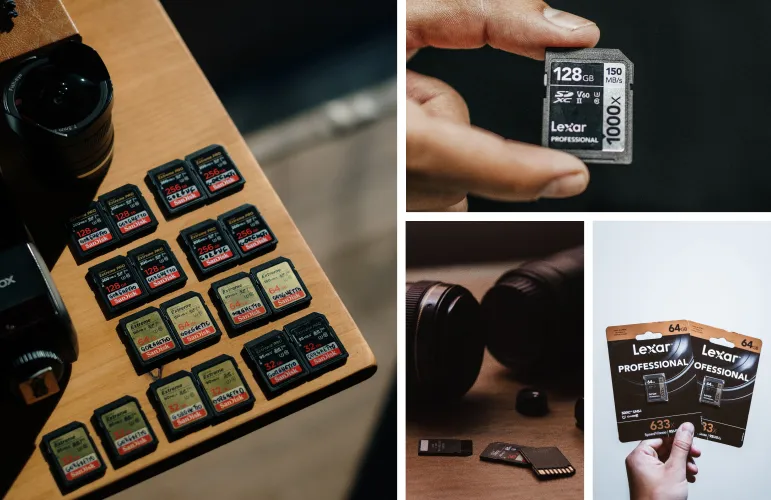
Street photography is an unpredictable land. You should come in handy with extra pairs of memory cards. Memory cards are fragile too. They can corrupt or even physically break during unfortunate events. Also, when you click street photographs, you don’t click a single snap. Since you need to be fast, you might want to take photos in burst mode, and taking RAW, high-definition photos might fill your storage space earlier than you expect.
Swapping cards is one of the basic street photography rules, so that you don’t lose or wipe out the entire folder. It’s easier to bifurcate photos too. Keeping a fresh pair gives you security and helps you organise your data.
Spare Batteries
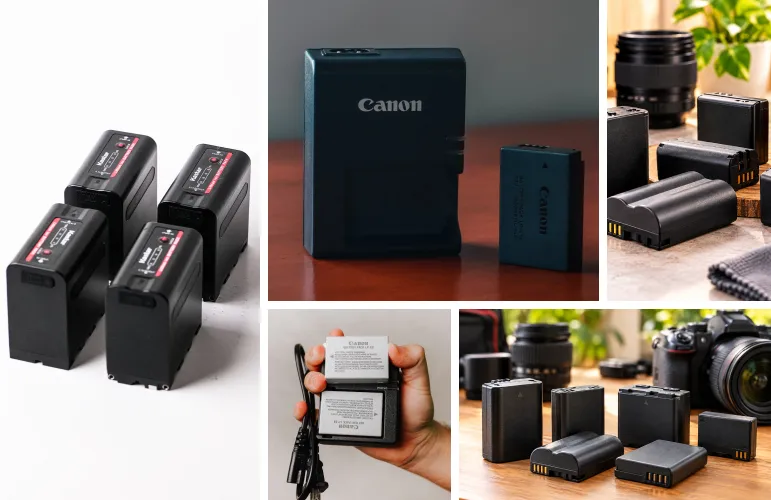
Spontaneous fleeting moments on the streets cannot be repeated or even predicted. That’s the reason you should always carry spare batteries. There is no fixed duration for your session. It can take hours or sometimes a whole day searching for the perfect shot. Remember, unlike indoor shoots, you don’t have a fixed power source for your street cinematography.
Nowadays, modern mirrorless cameras use electronic viewfinders and have active autofocus that drains the battery faster than older devices. Knowing that you are ready for such situations makes it easier to focus on the shoot.
Lens Wipes
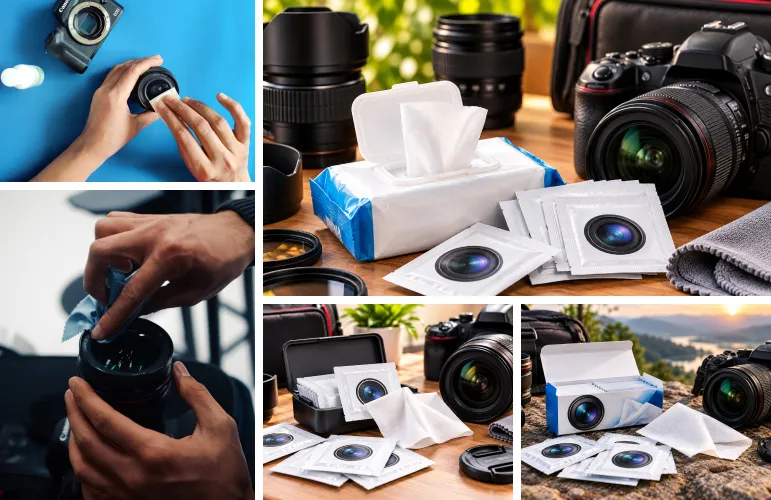
When you go out with your camera on the streets, outdoor elements like grease, dust, and unexpected smudges can ruin your shots. Imagine walking on the streets and finally finding the right frame. You point your camera, and all you can see is dust from vehicle exhaust, fingerprints, and, for some reason, the grease from the last thing you ate.
A microfiber cloth is something that people may rely on, but little do they know that the cloth can trap microfiber grit from the packets and scratch your lenses in a jiff. It can also leave streaks that will distort the light coming through the lens.
That’s the reason a professional street photographer relies on ultra-compact, pre-moistened lens wipes. They help dissolve oily residue, dust, and mist from rainy days without leaving streaks.
This is why a small thing like lens wipes becomes an important part of your street photography equipment list.
Filter
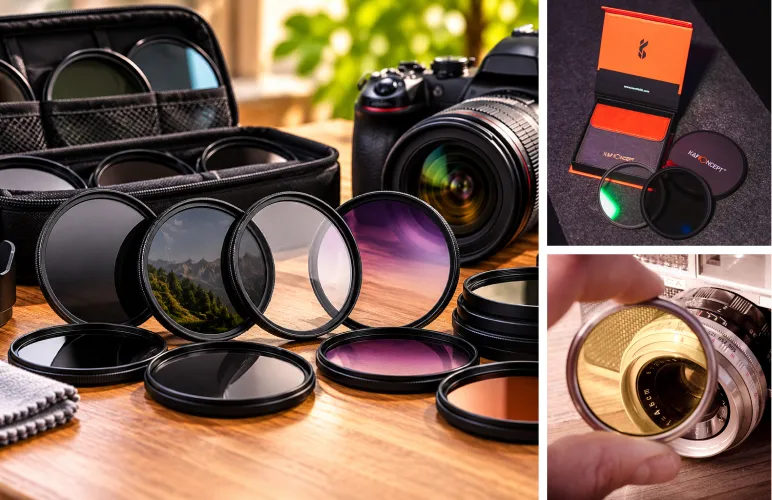
An ND filter is a camera accessory that attaches to the front of your camera lens to block it from incoming light. Photographs where you can see the rapid movement of light captured as an ambient streak are possible because of a slow shutter speed. But in broad daylight, it becomes difficult to capture such frames. An ND filter helps make this possible in daylight too.
Another filter you can carry is a circular polarising filter, aka CPL. This one cuts reflections and glare from shop windows, cars, and wet pavements. When you take a shot using this filter, you can focus more on the details and reflections. Perfect if you are looking for street cinematography.
The filters are only useful if you are planning to take wider perspectives. Small-aperture portraits can be pulled off without using one. But a UV filter can still be useful, as scratches and UV light may hinder your shots.
Flash
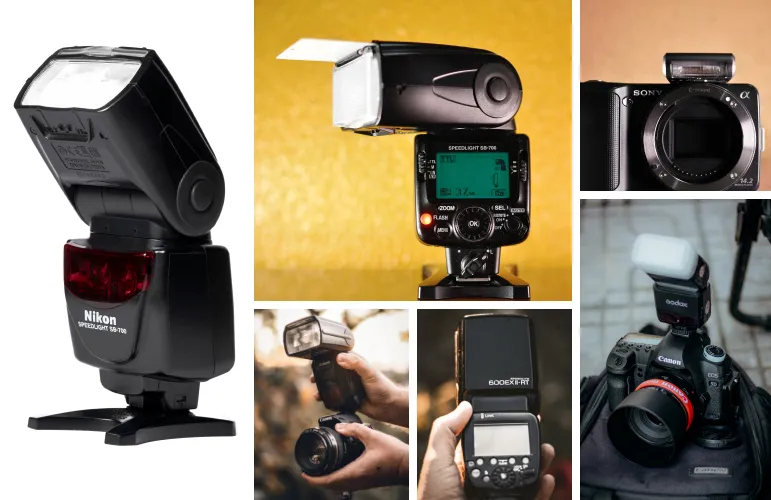
Though daylight is more than enough for your street photography, some people still use flash for experimentation. This is useful for low-light shots. If you are going for night street photography, then this gear gives you complete control over the light without pushing your ISO too high. Using it in a controlled environment can turn a messy background into a cinematic stage by making your subject pop.
If you have a certain frame in your mind that requires a flash and a slower shutter speed, then go with a flash in your street photography equipment list.
Raincoat
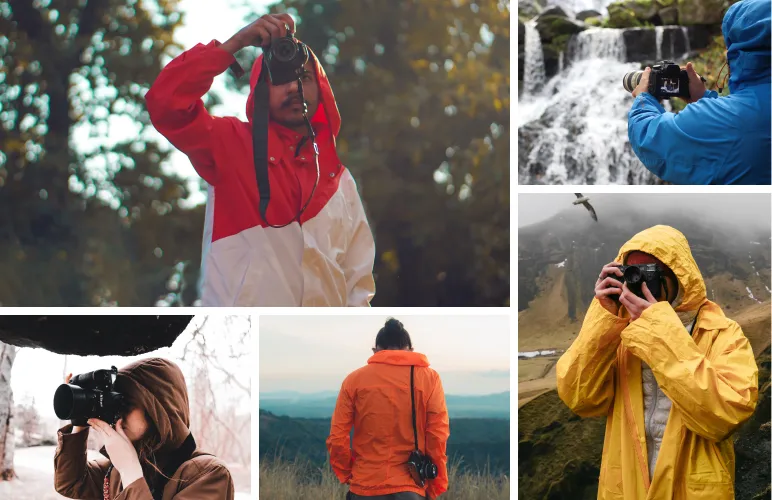
Bad weather is an uninvited guest. It’s better if you are ready.
There is a possibility that you wake up one day and find the weather pleasing. So you decide to go for street cinematography. You pack every piece of gear mindfully and hit the streets with your camera. While roaming, you finally find a spot. But at that moment, the weather starts taking a melancholic turn. It starts drizzling. You lose your focus.
For moments like this, you need to carry a raincoat every time on your street photography equipment list.
Getting inside the coat, you are now back. You are dry while the streets and roads quench their thirst. You become patient and focus on the shot. People around you run to get under a shed. No one knows they are inside the frame, and no one is paying attention. You are still calm and dry. You look through your lens and witness an ordinary street turning into a dramatic, reflective backdrop filled with a creative atmosphere. You take a deep breath and start clicking.
Bags
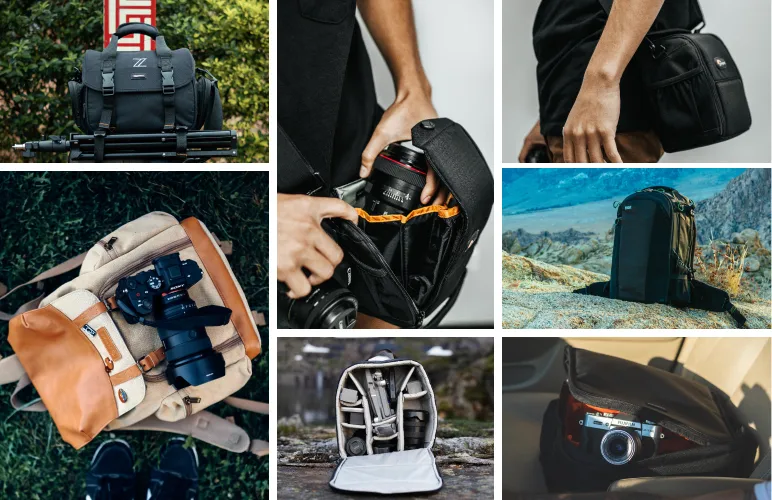
To carry all the items on the street photography equipment list, you will require a small bag. A small sling bag will work fine if you are just carrying the essentials.
But if you are thinking of carrying other gear that you know will come in handy on the shoot, then go for a comparatively larger bag. What you can do is take a camera bag with you as a sling that can hold the lenses and camera when they are not needed. You can also carry a larger backpack for the rest of the gear, your raincoat, water bottle, snacks for the road, and, if you need it, a laptop too.
Remember not to overdo the things you are going to take with you, as extra weight is just a hassle.
If you are thinking of buying one, go for something durable and compact with plenty of pockets.
Walking Shoes
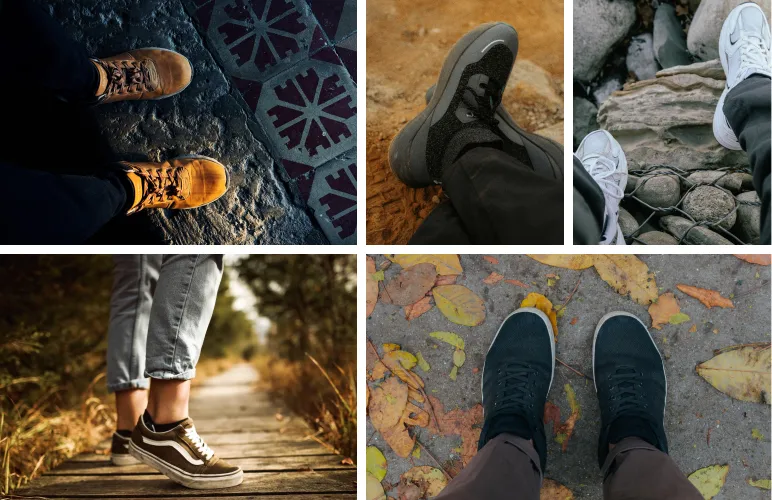
Let’s make this one straightforward. There will be too much walking, running, bending, or, in some cases, jumping. You need something comfortable under your feet. Good-quality shoes help you move comfortably. You stay relaxed, which means you stay longer, which means you get actual good shots. If they are water-resistant, even better. Don’t forget to tick this off from your street photography equipment list.
Basic Composition Rules in Street Photography
Every great shot that made you fall in love with street photography has a perfect composition. A composition is a way you arrange elements inside your frame to tell a story and guide the viewer’s eye.
You can find hundreds of books and e-books that can help you understand this in depth. But learning all the street photography rules is a gradual process. This skill takes time to be mastered. Don’t get overwhelmed with your first few walks.
Here are some quick composition techniques for beginners that you can use in your next shoot.
Fishing Technique
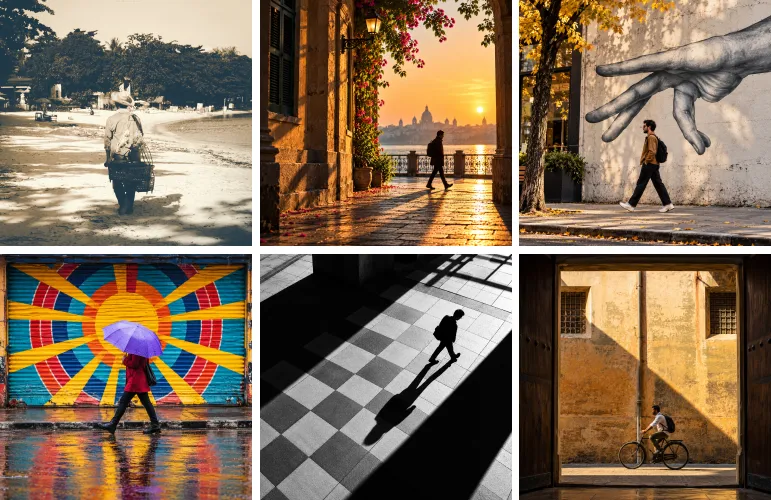
Find a spot with a perfect backdrop and then wait for a subject to approach the frame. This way, you are getting ready for a shot before the subject arrives.
Street photography ideas come to you when you prepare for two things. One is finding the perfect light and frame for your subject. And second is patience.
Leading Lines
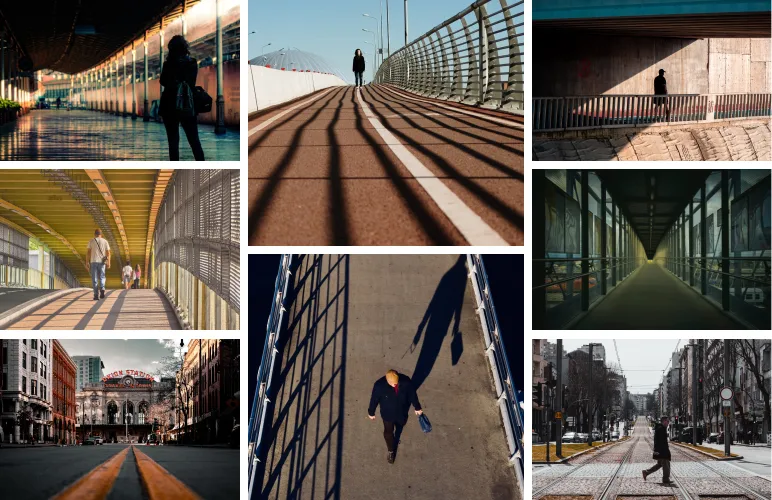
This technique requires you to find imaginary lines pointing towards something. Suppose you stand on a street and see a road covered with trees. Now, when you point your camera towards it, you can imagine all the trees standing straight and creating a line towards the sky or your subject. Eventually, you will realise how helpful this small creative street photography idea turns out to be in your photography.
Hand Gestures
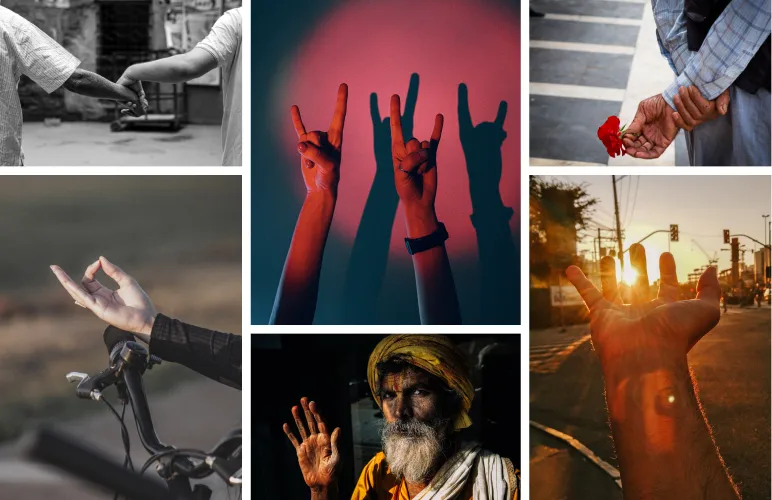
This one is not a part of street photography rules, but it’s a good technique for creating well-composed shots. When you find your subject, try to focus on their hand gestures. It gives a dynamic turn to a simple shot. Some people may play along with you and pose.
Triangles
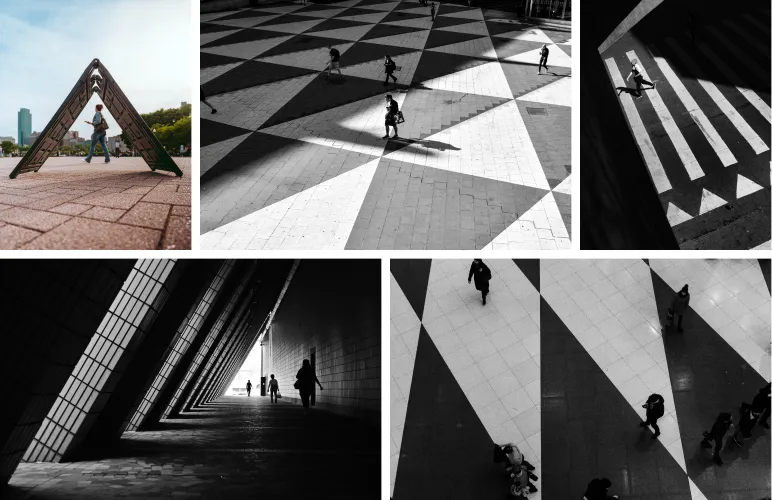
In this technique, you basically find three points that make up a triangle and try to focus on the subject inside it. It’s better if you search for some compositions based on this technique to get better street photography ideas.
Figure to Ground
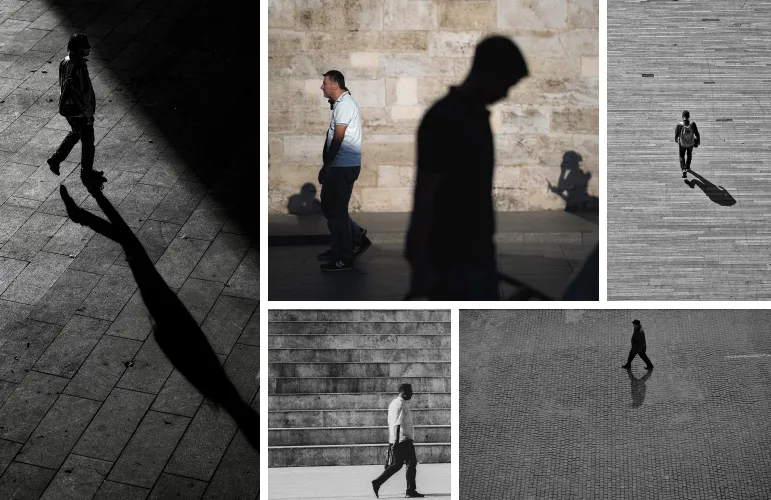
When you go out on the streets for your street portrait, your only aim is to create a frame that lets your viewer know what they are looking at. Create a composition that directs their eye towards the subject.
According to this technique, you separate your subject from the backdrop with the help of contrasting colours. For example, you can take a dark shot of the subject against a white background or a bright shot against a dark background. It works inversely. Good subject and ground separation makes the image clear and well-composed.
Juxtaposition
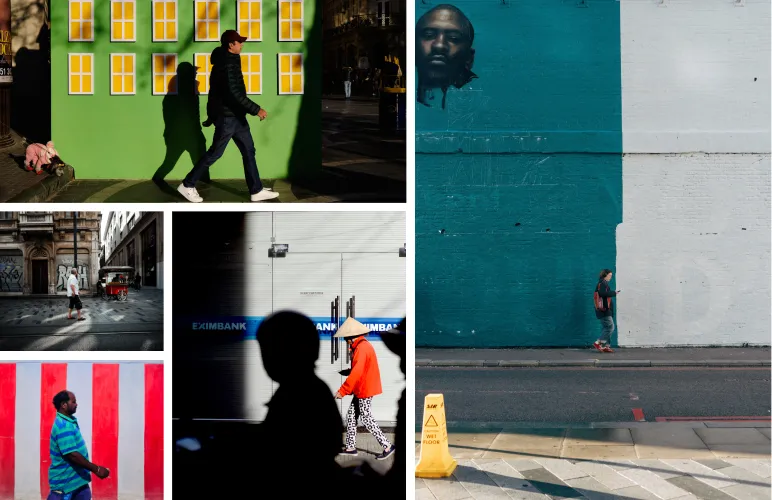
Think of this as putting two subjects side by side and creating a contrasting effect between both. When we say contrasting here, it doesn’t necessarily mean light and dark. It’s more about the contrasting existence of both subjects.
For example, you capture a well-dressed rich man getting out of a car, and in the same frame, there is a beggar adjacent to him, wearing a tattered shirt. The image shows the contrasting lives of both subjects.
Colour Theory for Street Cinematography
When you are on the streets, don’t just put all your energy into looking for interesting subjects. Colours matter too. You need to create a relationship between different colours. When you do this regularly, you will eventually start to look for forms of composition where colour alone becomes the story. Keep these colours in mind the next time you open your camera’s lid.
Complementary Colours
Complementary colours are colours positioned opposite each other on the colour wheel. Their contrast can create harmony, separation, and visual impact.
Examples:
- Red + Green
- Orange + Blue
- Yellow + Violet
In street cinematography, these combinations can either be noticed while shooting or discovered later during editing.
Warm vs. Cool Colours
Another important concept in street photography rules is the contrast between warm and cool colours.
Warm colours:
Red, orange, yellow, brown, tan.
Cool colours:
Blue, green, violet, and many shades of grey.
Warm colours can suggest energy, passion, action, danger, or excitement, while cool colours can create feelings of calmness, peace, relaxation, and meditation.
Using Warm and Cool Colours Together
A strong technique is to combine predominantly warm or cool scenes with a contrasting colour for a perfect street portrait.
For example:
- A warm-coloured subject against a cool background
- A cool-coloured subject against a warm background
- A mostly cool scene with a small splash of warm colour
Human skin naturally contains warm tones, so placing a person against a cool background can create strong figure-to-ground separation and contrast.
Colour as a Street Photography Technique
The main lesson is to train your eyes to notice colours.
Instead of simply photographing interesting people or events, look for:
- Complementary colour combinations
- Warm and cool contrasts
- Interesting colour palettes
- Specific hues
- Colourful objects
- A dominant colour with a contrasting splash of another colour
Once you start noticing colours, street photography ideas will come to you out of nowhere.
Conclusion
One of the most important things to learn while practising street photography is composition. Once you have ticked off everything from your street photography equipment list, you just have to find the composition, colours, and story of the streets.
Watching over every perfectly composed frame is not possible every time while you shoot. Practising your street portraits is the only way to master the craft.
It’s alright if you can’t find the best one today. There is always tomorrow.
We came a long way, from understanding what is street photography to learning how to start practising the basics. One thing that creates a big problem is when people confuse street photographers with wedding photographers. If someone in your family is into street photography, please don’t ask them to shoot your wedding day.
Instead, you can visit EventMonial, a site that connects you to thousands of professional wedding photographers in Kolkata. EventMonial also provides services like event management, makeup artists, wedding venues, budget planning, and many more. Check out the site before your big day.
What is the required equipment for street photography?
–In general, a camera, appropriate lens, extra memory cards, batteries, camera strap, lens cloths, camera bag, and walking shoes would be enough.
What lens is the best choice for street photography?
+There are several focal lengths for shooting street photos: 28 mm, 35 mm, 40 mm, and 50 mm. The choice will depend on the distance from the subject as well as your street portrait.
How can I get interesting street photography ideas?
+You should not be limited by the particular subject, but rather pay attention to the light, colors, geometry, gestures, reflections, architecture, and the interplay of people.
What is the best camera for street photography?
+The best camera for street photography should be light and compact. Mirrorless cameras and compact cameras are the best choice for your street photography equipment list.
Can I perform street photography using a smartphone?
+Yes, smartphones can be used for training purposes when composing the scene, capturing the light, color, and timing.