


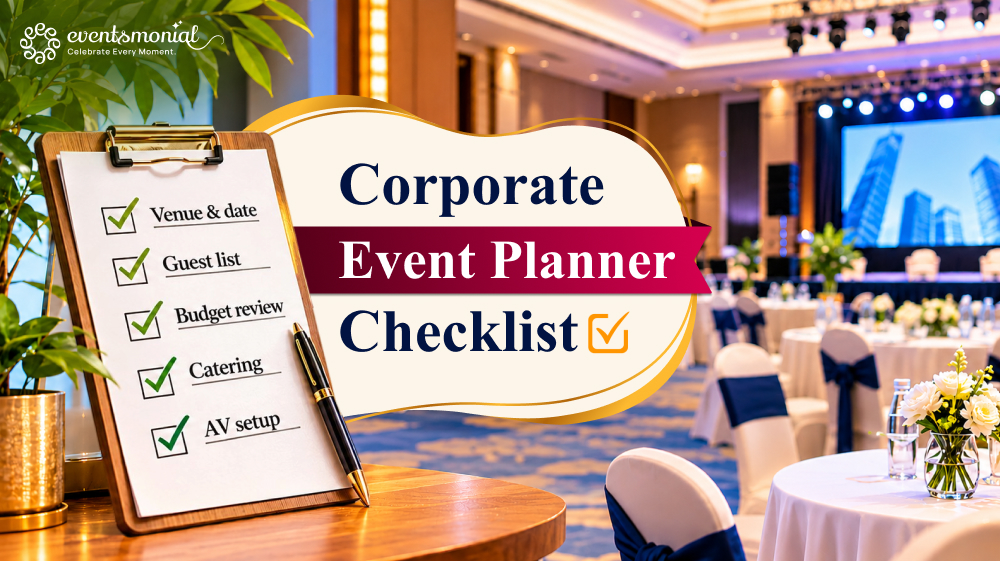
Planning a unique corporate event for your company? It’s not that hard. Find the complete 11-step corporate event planner checklist for hosting a perfect event.
So your boss has finally understood the potential you possess.
It’s good to see you with all this responsibility of throwing a complete corporate event by yourself. You must be searching for a list, a checklist kind of thing that can help you with all this!
Yes, we know the pressure is high. We can barely imagine your stress level right now. But we did what we could. We compiled everything into a corporate event planner checklist.
After you are done with this, you will witness a show where the praises will find their way to reach you at the party, as you hold up your glass and feel proud of yourself for throwing such a gala.
So, before you dress up, don’t forget to tick these off your corporate event planner checklist.
Corporate Event Planning in 11 Easy Steps
Yeah! That’s right. It only takes 11 steps to throw the perfect corporate event. Still nervous? It happens. When you have to manage such a big event, especially when all eyes from the management are on you, things can become challenging. Remember one thing: you can’t do this alone. Gather a team of teammates you can actually trust to pull off the work, and get in touch with corporate event planning vendors.
You need to divide the work and manage the tasks. It’s a tough job, but with the right people, it’s achievable. Now, take out your pen and paper, and start writing.
Step 1: What Are We Looking At?
This goes without saying, but let’s address it now. What kind of corporate event are you planning?
By the kind of event, means, is it a board meeting, product launch, grand annual conference, awards evening, or a simple training workshop?
It’s important to know this because the next things you need to consider are:
- Expected guest count
- Session style
- Need for stage presence
- Breakout requirements
- Dining format
- Technical complexity
Every event has its own requirements. In this corporate event planner checklist, we are going to cover general requirements that can help with all kinds of events. But if you have a specific type of event in mind, we suggest gathering more detailed information.
Moving forward, if you are planning a company town hall for at least 300 guests, booking an auditorium can work. You can always go with a larger convention space. But if it is a simple training event, such as a strategy session for, let’s say, 80 delegates, you can save some bucks by booking a banquet hall with stage support. We are going to talk about the stage in detail further.
So, for the first step, clarify your brief and make understanding your event type the first step as a corporate event organizer.
Step 2: Now Work on the Budget
Build the budget in layers. At this stage, you must have a rough idea of the budget. When you have clarity yourself, talking to corporate event planning vendors will become easier. You can’t have an exact number until the event is over, but start with tentative numbers for these:
- Venue hire
- AV and technical setup
- Catering
- Branding and stage design
- Guest logistics and registration
- Photography or event coverage
- Contingency allowance
You can also take help from corporate event management services for this part. They can probably give you a closer look at everything. The cost of a business event can vary widely depending on the venue type, guest count, and production needs.
For smaller internal events, you don’t have to worry so much because the costs may stay relatively controlled. But for larger conferences or annual meets, expenses can rise unexpectedly. That’s why you should get a general idea of what you are stepping into.
Step 3: It’s Time to Finalise the Event Planner and Tell Them About Your Plan
The next step in your planning is to decide which theme you want to go with. Most of the time, the board has already decided on the theme. This part is important to discuss, as the theme will help set the tone and make the event’s message clear.
The thing is, when you decide on a well-designed theme, it amplifies the event’s purpose. You can’t do this part alone, so it’s better to get in touch with event planning companies in India.
It’s better to find a planner and finalise your choice based on the following:
- Relevant Portfolio: Find a planner with relevant experience. Review past events similar to yours in theme and scale.
- Budget Transparency: Make sure they share a clear cost breakdown.
- Vendor Relationships: A great planner has a trusted network of caterers, decorators, and photographers.
- Communication & Collaboration: They should listen closely and offer constructive ideas.
- Problem Solving & Flexibility: Events rarely go 100% as planned. A planner needs to be good at solving problems.
After you finalise your corporate event planning vendors, it’s time to sit down and brainstorm all the formats and ideas you have in mind. Together, you need to outline who will attend your conference or corporate event and select a theme that resonates with your audience.
Step 4: Check Location and Access
The next step in our corporate event planner ideas is to visit the event location. Since traffic can be an issue, wherever you decide to host the event, choose a venue that suits the locations your guests are travelling from.
Take a ride with your event planner to the site, and consider these points:
- Hall capacity in your preferred layout
- Screen visibility
- Sound quality
- Power backup
- Registration area
- Green room or speaker preparation areas
- Restroom access
- Loading access for vendors
Don’t get intimidated by the decor and the size of the venue. You need to check how the venue will perform under real event conditions.
Step 5: Who All Are Attending?
It’s time to make a complete list of all the guests who are going to attend the event, unless you are hosting an open event. This will greatly help you balance your budget with your corporate event planner and plan all the other aspects related to the event.
Remember to invite all those who align with the goal of your event. Let’s say you are hosting a product launch for your brand. You need to invite big investors as well as loyal customers. Putting them on a list early can help you plan the event according to your guests’ needs. Here are some ways you can create a guest list:
- Think back to the purpose of your event and identify your target audience.
- Don’t make the list too long. Keep your venue’s capacity limit in mind. Send invitations only to those you need to have a successful event.
- Keep an eye on key stakeholders, such as customers, employees, clients, and investors.
- Tap into your professional network.
After creating the guest list, you need to get in touch with your creative side and start creating a business event invitation. But before that, there are some more things you need to check off your corporate event planner checklist.
Step 6: Research Speakers
There is no doubt that bringing the best speaker to your event can make it more engaging. Find speakers who can reinforce the purpose of the event in the most interesting and straightforward way.
Here is how you can narrow down your search:
- Research speakers who have prior experience at corporate events.
- Compile a list of your ideal speakers and choose one recommended by a top corporate event planner.
- Compare the costs of different speakers on your list.
- Consider each speaker’s reputation because it could impact the perception of your event.
- Add any other creative ideas you can think of.
It’s better to finalise your speakers at this stage, as they will need time to coordinate the logistics, prepare their speeches, and arrange the required audiovisual equipment and stage setup.
Remember to:
- Sign contracts with your speakers, panelists, and any other planned entertainment.
- Get their biographies and photos.
- Arrange travel and accommodation for the speakers and performers.
Step 7: All the Event’s a Stage
We know that we have already delegated the stage work to all the corporate event planning vendors and visited the site once. But at this point, you still need to check all the stage arrangements to be sure everything is in place. There are multiple seating arrangements you can choose from, including:
- Theatre style for presentations, launches, and keynote sessions
- Classroom style for training and note taking
- Cluster seating for workshops and team discussions
- Banquet seating for recognition events and formal dinners
Remember to keep the stage practical. A stage should suit the programme, not just the photograph. It is useful only if the audience can see, hear, and follow the programme comfortably.
Step 8: One Cannot Think Well, If One Has Not Dined Well
You plan a great event where everything goes your way. But if people get disappointed when they move towards the food during a break, the event may no longer be considered successful.
Food has the power to shape the mood of the gathering. Get in touch with the best caterers with the help of corporate event management services. Good catering feels seamless.
One more tip is to plan the meals around the programme. So it is better if you include:
- Tea and coffee timings
- Buffet capacity
- Dietary preferences
- Service speed
- Breakout room access
- Networking space during meal periods
Poorly planned breaks can create congestion and delay the next session. If needed, get in touch with the best event planning companies in India for this part of the planning.
Dining quality influences the overall impression of the event.
Step 9: Let Them Know There Is an Event!
Now is the time to get creative and start promoting your event with e-invites. You can find thousands of interesting and creative templates for your invitations online. Remember to:
- Develop a messaging document aligned with your event.
- Spark interest with creative emails and e-invites.
- Consider paid advertising and event distribution.
- Promote your event through online event calendars.
- Create a promotional video.
Promotional videos and video-style invitations are trending nowadays. You can either talk to corporate event planning vendors or simply visit EventsMonial for a creative e-invite. Choose the best template and send your invitations well in advance of the event.
Step 10: Call Your Vendor Again
Most of your preparations are almost done. It is time to call the vendor again to double-check everything for the big day.
You cannot afford to have any technical glitches on the day. Your AV and technical setup can make or break the event.
Your guests won’t appreciate microphone cutouts. Additionally, such issues can make the event look very unprofessional. Visit the stage with your corporate event organizer and confirm the following:
- Number of microphones
- Screen size and placement
- Projector or LED requirements
- Speaker clickers
- Confidence monitor, if needed
- Laptop connection compatibility
- Internet support
- Recording or live streaming requirements
Test the room as well. A proper walkthrough helps ensure a smooth experience because it allows organisers to check the setup against the actual hall layout. The best way to ensure everything is in place is to call the speaker and plan a technical rehearsal. This will help prevent any mishaps on stage on the final day.
Step 11: Make a Final Check of the Schedule and the People
You are now at the final stage of your corporate event planner checklist. Finalise the event schedule and script once again.
At this point, you need to review and revise the entire schedule and make any necessary adjustments. Make copies of the schedule and distribute them to all the participants, speakers, and your corporate event planner.
It is important to stay in touch with the attendees and keep the lines of communication open.
- Send your e-invites again to all the guests.
- Build excitement for the event on social media.
- Contact all the sponsors and ensure they have taken care of everything.
- Remind your vendors of all their commitments.
- Design a backup plan in case your in-person event shifts to a virtual format.
- Keep attendees updated on any changes to the plans.
Get Everything on EventsMonial
Thinking of organising an entire corporate event on your own? You may need some help. Finding the best corporate event management services for your event can get overwhelming. Get in touch with EventsMonial. You can find the best event planners who can take care of everything, from catering services and venue bookings to creating an e-invite. The Event Planning App simplifies your search and lets you connect with some of the best service providers in the industry.
Conclusion
Planning a corporate event can feel overwhelming, especially when you are managing everything for the first time. But with the right team, a clear schedule, and a little attention to detail, you can make the process much easier. Use this corporate event planner checklist to keep track of every important task, from setting the budget and choosing the venue to managing vendors, catering, and the final schedule.
FAQ
What should be included in a corporate event planner checklist?
–A corporate event planner checklist should include the event objectives, budget, venue selection, guest list, speakers, catering, stage setup, technical requirements, invitations, event schedule, and vendor coordination.
How far in advance should you plan a corporate event?
+Ideally, start planning a corporate event two to six months in advance.
How do you choose the right venue for a corporate event?
+Consider the guest count, location, accessibility, seating arrangements, parking, audiovisual facilities, catering options, and available space for networking or breakout sessions.
How can you make a corporate event more engaging?
+Include interactive sessions, engaging speakers, live demonstrations, networking opportunities, audience polls, workshops, and activities that align with the event’s objectives.
What is the role of a corporate event organizer?
+A corporate event organizer coordinates different aspects of an event, including venue bookings, catering, guest management, stage setup, technical arrangements, and speakers. You can connect with professional event planning companies in India to find experienced organisers.
