Planning an event involves hundreds of choices, but few decisions carry as much long-term weight as selecting your photographer team. Decades after the venue lights dim and the flowers fade, your photo album remains the primary window back into your celebration.
As photography styles have evolved, the ongoing debate surrounding traditional vs candid photography leaves many couples wondering which approach will best capture their story.
Should you go with formal, perfectly posed family portraits or unscripted, spontaneous emotional captures? Understanding the difference between candid and traditional photography enables you to choose a visual style that matches your personality, family expectations, and overall budget.
Why Choosing Between Candid and Traditional Photography Matters for Your Big Day
Your wedding or milestone celebration is a fast-paced blend of traditional rituals and spontaneous emotional moments. Choosing the right photographic approach determines not just how your album looks, but how you experience your actual wedding day.
If you opt strictly for formal direction, you might feel like you spent your entire reception posing on stage under heavy lights. Conversely, if you rely solely on unscripted coverage, you risk missing classic extended family portraits that parents and grandparents cherish. Evaluating candid and traditional photography ensures your photography team aligns with your schedule, guest count, and artistic preferences, preventing last-minute stress during major rituals.
What Is the Difference Between Candid and Traditional Photography?
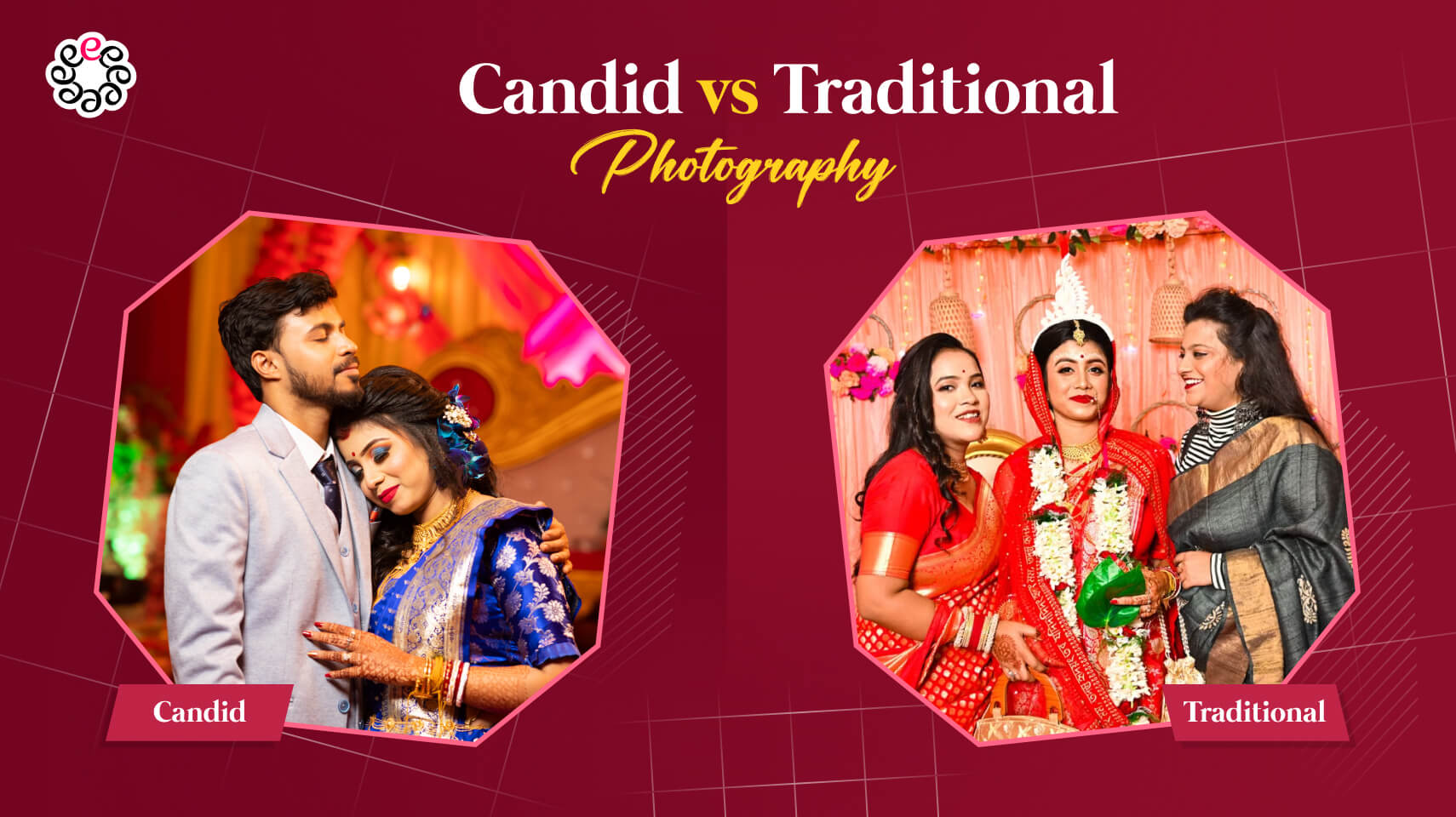
To choose photographer teams that match your vision, it helps to understand what candid photography is alongside its classic counterpart. The core distinction lies in photographer direction, lighting equipment, and overall storytelling philosophy.
| Feature | Traditional Photography | Candid Photography |
|---|---|---|
| Primary Focus | Structured coverage & rituals | Emotions & unscripted moments |
| Photographer Role | Director (guides & poses subjects) | Silent observer (blends into background) |
| Lighting & Gear | External flash units & standard zooms | Fast prime lenses & ambient lighting |
| Posing Style | Posed, camera-facing portraits | 100% natural, non- intrusive |
| Album Role | Heirloom prints & family archives | Storytelling & emotional highlights |
Evaluating traditional and candid photography highlights that neither style is inherently superior. Instead, they serve distinct, complementary purposes throughout an event.
Top Benefits of Traditional Photography for Classic Stage Coverage
While modern couples often gravitate toward documentary aesthetics, classic coverage remains the backbone of Indian event documentation.
- Comprehensive Ritual Coverage: Ceremonial rituals move quickly. A traditional photographer stays stationed at key angles to document every step, ensuring essential customs are captured.
- Structured Group Portraits: Managing large families and guest lists requires clear direction. Posed coverage ensures everyone faces the camera with clear lighting and clean compositions.
- Reliable Lighting Quality: Using dedicated off-camera flash units neutralises tricky venue lighting, delivering bright, sharp photos regardless of background shadows.
- Parent-Approved Albums: Older generations value clear, formal portraiture. Traditional coverage produces timeless family photos designed for framed displays and classic physical albums.
Top Benefits of Candid Photography for Authentic Emotional Storytelling
If formal portraits act as the official history of your day, candid coverage captures its heartbeat.
- Genuine Emotional Moments: From a father’s quiet tear during the send-off to uncontrolled laughter on the dance floor, unscripted photography captures authentic feeling.
- Non-Intrusive Workflow: Candid shooters use telephoto and fast prime lenses to document events from a distance, allowing you and your guests to enjoy the moment without feeling observed.
- Cinematic Artistic Framing: Emphasising creative compositions, shallow depth-of-field, and natural light, these images often look like frames from a movie.
- High Social Engagement: Spontaneous, highly emotional captures translate exceptionally well to digital galleries, modern storyboards, and social media platforms.
Key Considerations When Selecting Traditional Photography vs Candid Photography
Choosing between traditional photography vs candid photography requires balancing artistic vision with event logistics:
- Guest Count and Venue Scale: Large gatherings exceeding 500 guests demand structured team coordination to manage stage lines, while intimate functions benefit from non-intrusive, documentary coverage.
- Family Expectations: Discuss expectations with key decision-makers early. If parents prioritise formal family shots, ensure your photography plan includes dedicated portrait windows.
- Timeline Flexibility: Posed portraits require dedicated blocks on your itinerary, whereas unscripted shooting adapts directly to the natural flow of the day.
Lighting & Venue Guide: Indoors, Outdoors, and Low-Light Conditions
Venue environments significantly impact how different photo styles perform:
- Indoor Banquets & Covered Halls: Windowless venues with heavy overhead halogen or ambient LED lights present technical challenges. Traditional setups resolve this using flash systems, whereas candid photographers rely on wide-aperture lenses and low-light sensors to preserve atmospheric mood without harsh flashes.
- Outdoor Daytime Lawns: Sunlight provides ideal conditions for both styles. Spontaneous shooting thrives on natural backlit highlights, while posed portraits utilise fill flash to eliminate harsh shadows under eyes and chins.
- Evening Open-Air Receptions: Outdoor celebrations under fairy lights require a balanced dual strategy. Candid shooters harness ambient bokeh for romantic couple portraits, while structured setups ensure stage guest lineups remain bright and sharp.
Cost Breakdown: Traditional Photography vs Candid Photography
Understanding pricing structures helps you allocate your budget effectively across both formats:
| Coverage Style | Day Rate Range (INR) | Primary Cost Drivers | Deliverables |
|---|---|---|---|
| Traditional Photography | ₹15,000 – ₹35,000 / day | Standard camera gear, direct flash setups, minimal post-processing | Full coverage event soft copies, 100–200 high-resolution stage shots |
| Candid Photography | ₹35,000 – ₹85,000+ / day | Specialized prime lenses, photojournalistic expertise, frame-by- frame color grading | 300–500 color- corrected story shots, signature couple portraits |
| Hybrid Dual- Team Package | ₹55,000 – ₹1,200,000+ / day | Multi-shooter crew, unified timeline management, combined photo processing | Full event documentation + curated documentary storybook album |
Due to higher equipment costs, advanced editing, and the skill required to capture fleeting moments, candid specialists command higher day rates.
How to Book the Best Candid and Traditional Photographers via EventsMonial
You don’t have to choose just one style. Modern event planning favours a hybrid model—pairing a traditional team for stage and ritual coverage with a candid artist focused on emotions and couple portraits.
EventsMonial simplifies finding candid and traditional photography teams near you. Our platform allows you to compare portfolios, verify past client reviews, examine full event galleries, and request custom quotes tailored to your budget.
Whether you need full-scale coverage for a multi-day wedding or focused artistic photography for an intimate reception, EventsMonial connects you with verified professionals to capture your story.
Frequently Asked Questions
1. Can a single photographer handle both candid and traditional photography?
–While one shooter can take unscripted shots between formal poses at smaller events, major celebrations move too fast. Choose wedding photographer team ensures one handles stage lines while the other captures spontaneous moments.
2. Is candid photography always more expensive than traditional photography?
+Yes. Candid photography requires fast prime lenses, high-end camera bodies, and time-intensive colour grading, which increases package pricing.
3. Which photography style works best for printed wedding albums?
+A balanced hybrid album works well. Use formal posed portraits for multi-family group spreads and candid shots for storytelling sections like the sangeet, haldi, and couple portraits.
4. How much time should we block for formal traditional group portraits?
+Plan for approximately 45 to 60 minutes for immediate family and stage group photos to keep your event schedule running smoothly.
5. How far in advance should I book my photo team on EventsMonial?
+For peak wedding dates from November through February, booking your photography team 4 to 6 months in advance can help you secure your preferred creative crew.