

Wedding photographs preserve some of the most cherished moments of your special day. One of the biggest decisions couples make while planning their wedding shoot is choosing between indoor and outdoor settings. Understanding the differences can help you work better with your photographer and achieve the style of images you envision.
This guide explores indoor vs outdoor wedding photography, along with their advantages, challenges, and practical lighting considerations.
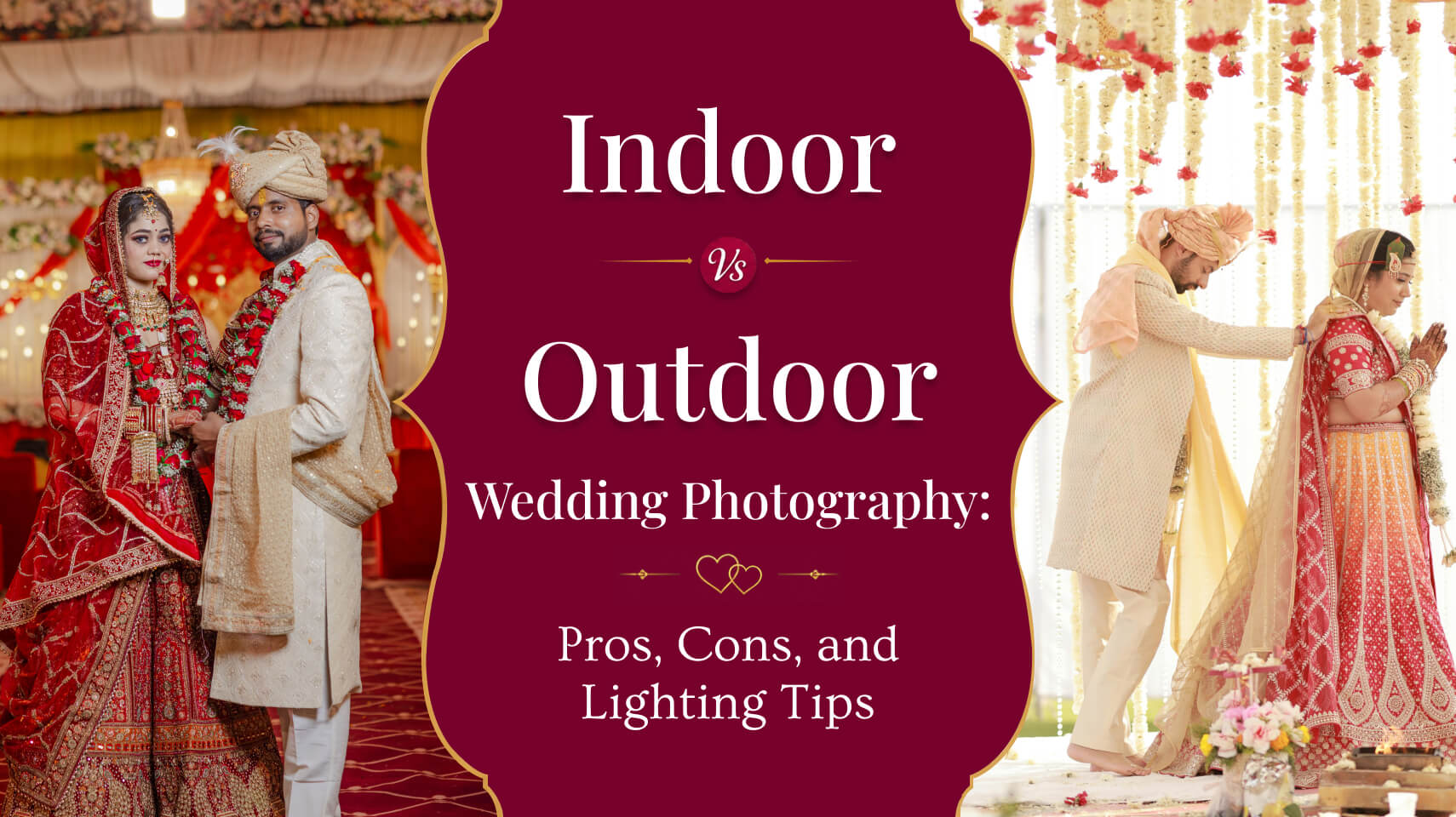
Indoor vs. Outdoor Wedding Photography: Pros, Cons, and Lighting Tips
Many couples are drawn to outdoor wedding photography because of its scenic backdrops and natural ambience. Gardens, beaches, heritage properties, and open lawns provide stunning settings that can add depth and character to wedding photographs.
Pros
Beautiful natural backgrounds with minimal setup.
Greater variety in compositions and locations.
Softer and more flattering light during sunrise and sunset.
A more candid and organic feel to photographs.
Cons
Weather conditions can be unpredictable.
Harsh midday sunlight may create strong shadows.
Outdoor locations may have crowds or distractions.
One of the biggest advantages of outdoor shoots is the opportunity for natural light wedding photography. Natural light helps create warm, authentic images and often enhances skin tones, making photographs feel timeless and elegant.
Understanding Outdoor Wedding Photography
Indoor venues such as banquet halls, luxury hotels, and traditional wedding mandaps offer a controlled environment for Kolkata pre-wedding photography. While lighting conditions may vary, experienced photographers can create stunning results indoors as well.
Pros
Protection from weather-related disruptions.
Greater control over the environment.
Consistent settings throughout the event.
Easier management of décor and lighting arrangements.
Cons
Limited access to natural light.
Smaller spaces may restrict certain angles.
Dependence on artificial lighting in some venues.
Following a few indoor wedding photography tips can significantly improve the final results. Choosing venues with large windows, light-coloured interiors, and adequate ambient lighting can help create brighter and more visually appealing photographs.
Working with Your Photographer’s Lighting Strategy
Lighting is one of the most important factors in wedding photography, regardless of the venue. This is where collaborating with a professional wedding photographer becomes essential. They understand how to adapt to changing conditions and make the best use of available light.
Some useful wedding photography lighting tips include:
Schedule outdoor portraits during the golden hour for softer light.
Avoid direct midday sunlight whenever possible.
Use shaded areas for more balanced exposure.
Incorporate venue lighting creatively for indoor photographs.
Allow photographers sufficient time to assess and adjust lighting conditions.
A skilled photographer can also use reflectors, flashes, and camera settings to ensure photographs remain well-lit without looking artificial.
Choosing What Works Best for Your Wedding;
There is no one-size-fits-all answer when deciding between indoor and outdoor wedding photography. Your choice should depend on your venue, wedding theme, season, and personal preferences.
If you are planning your wedding in Eastern India, consulting a trusted Kolkata wedding photographercan help you understand how local weather and venue conditions may influence photography outcomes. Similarly, couples planning engagement shoots may benefit from professional guidance for pre-wedding photography, where both indoor and outdoor locations can be creatively utilised.
Both indoor and outdoor wedding photography offer unique advantages. While outdoor settings provide natural beauty and dynamic backdrops, indoor venues offer consistency and greater environmental control. By understanding the strengths and limitations of each option and discussing lighting expectations with your photographer, you can ensure your wedding album beautifully captures every moment of your celebration.