A Gujarati wedding is a celebration of family, spiritual blessings, Garba nights, and Gujarati cuisine. Understanding the Gujarati wedding rituals helps the couple and families celebrate the event in a way that is dear to their hearts and helps retain the true essence of the Gujarati wedding.
What Makes a Traditional Gujarati Wedding So Special?
A traditional Gujarati wedding is known for its unique and beautiful Gujarati culture and traditions, filled with joy, colour, music, and most importantly, spirituality.
While a wedding day is indeed a celebration, the Gujarati wedding has various pre-wedding, wedding day, and post-wedding rituals which bring two families together. The rich and vibrant Gujarat marriage rituals give this unique wedding tradition its unique charm and beauty.
Some of the most special Gujarati wedding customs include:
- Family bonding and togetherness
- Wearing traditional Panetar sarees and Gharchola dupattas, exquisite jewellery, and sherwanis
- Lively Gujarati music and dance like Garba and Dandiya
- Beautiful Gujarati recipes and food which symbolise the region’s deep-rooted culture and values
- Spiritual rituals and ceremonies which mark important celebrations in a couple’s life and signify prosperity, love, and much more
- Gujarati hospitality by feeding and entertaining guests to the core
Gujarati Traditions
A Gujarat wedding always has its unique character based on the families’ traditions.
What Are the Important Gujarati Wedding Rituals Before the Wedding?
Wedding celebrations begin way before the wedding day itself. The pre-wedding Gujarati wedding rituals are a mark of togetherness and bonding between the families. Here are some important Gujarati wedding rituals before the wedding:
1. Chandlo Matli: The Beginning of the Journey
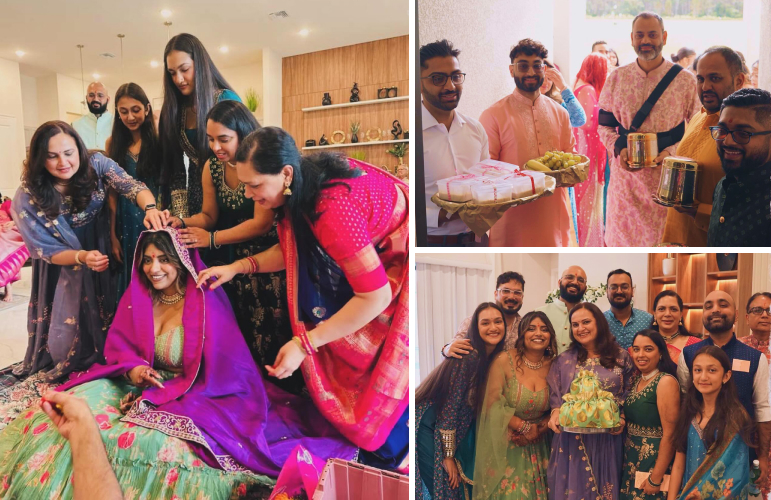
Chandlo Matli is a traditional Gujarati wedding custom performed in many communities that signifies the groom’s acceptance by the bride’s parents. The bride’s family applies a chandlo or tilak on the groom’s forehead, and the groom’s family gives gifts, sweets, or traditional items to the bride’s family. This pre-wedding custom marks the beginning of a beautiful journey between the two families.
2. Gol Dhana: A Gujarati Engagement Ritual
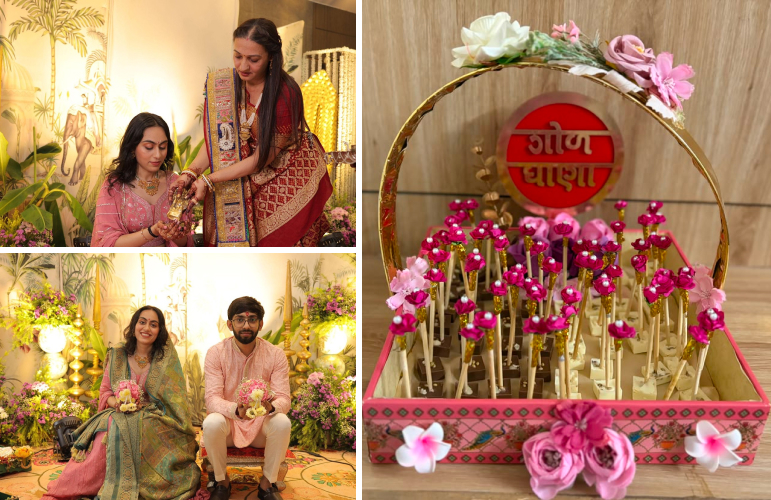
Gol Dhana is generally considered a ritual performed either during an engagement or Sagai ceremony. This is a joyous event for the families, and it is believed that the name ‘Gol Dhana’ comes from jaggery and coriander seeds, which are symbols of sweetness and prosperity. During this celebration, the bride and groom exchange rings, and elders bless them. The families come together to pamper the young couple with sweets and traditional Gujarati delicacies.
3. Mehendi and Sangeet: Celebrating Joy and Colours
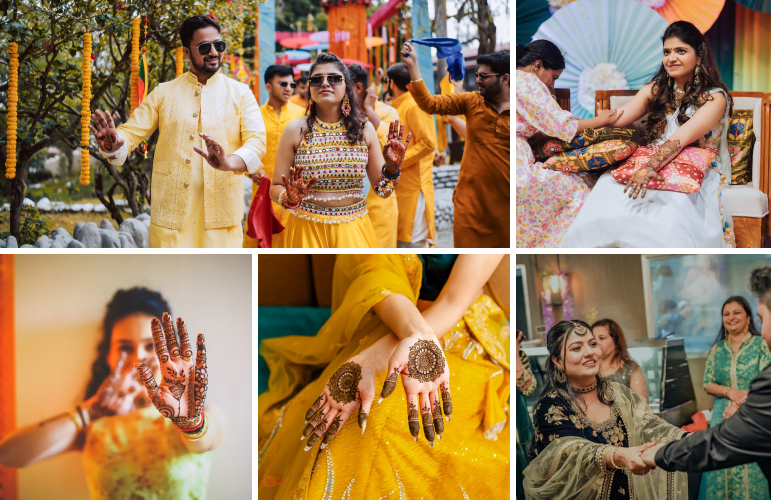
Mehendi and Sangeet are festive Gujarati wedding events filled with music and dance. Intricate henna patterns adorn the bride’s hands and feet, and friends and family members perform Garba dances and play Dandiya. This pre-wedding event is also a great platform to engage in games, performances, and theme-based dance competitions and showcase Gujarati culture to guest families.
4. Mameru or Mosalu: Maternal Family’s Blessing
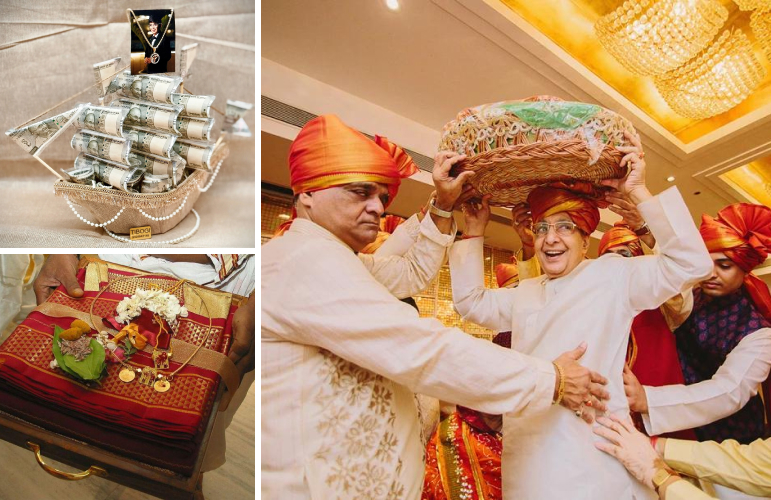
Mameru is a traditional Gujarat ritual performed by the bride’s maternal uncles. They bring gifts and clothes for the bride and present them to her. Mameru is a symbolic representation of the emotional bond between the bride and her maternal family. It is also a way to appreciate what the mother has given to the bride during her life.
5. Mandap Mahurat and Griha Shanti
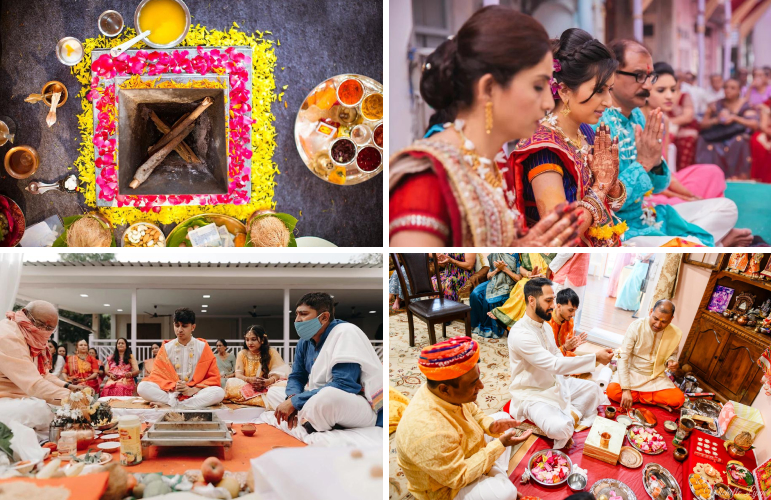
This event marks the beginning of all wedding preparations, and Griha Shanti is performed in many families to bring positivity and blessings for the wedding celebrations.
What Are the Various Gujarati Wedding Rituals on the Wedding Day?
The wedding day has a series of beautiful Gujarati wedding rituals, which marks the union of two families through sacred traditions and celebrations.
Different family practices may follow separate customs, but they all represent the true essence and importance of a wedding. The major Gujarat wedding rituals step by step on the wedding day include the following:
1. Varghodo: Groom’s Grand Entry
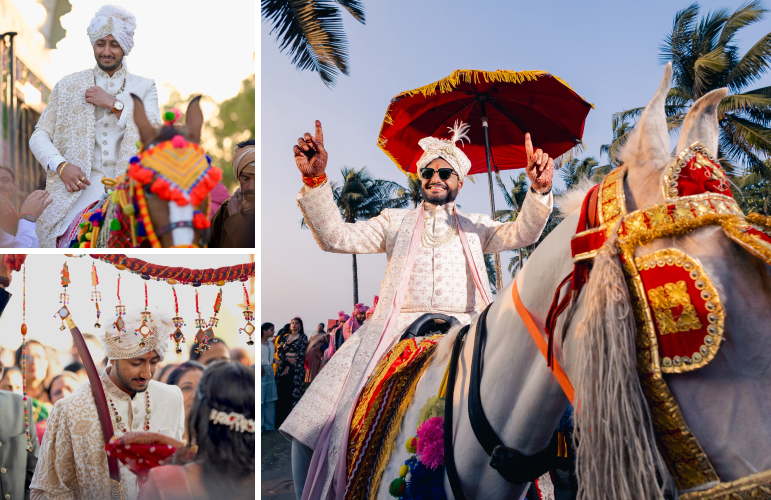
The wedding day celebrations usually begin with Varghodo, a traditional Gujarati custom where the groom arrives at the wedding venue in a grand procession. Friends and family members dance and play music, filling the air with euphoria and excitement.
The groom’s arrival is welcomed with traditional rituals and blessings by the bride’s parents, symbolising the beginning of their new life together. It is a memorable event filled with emotions and excitement for the bride and groom.
2. Ponkhnu and Madhuparka: Welcome the Groom
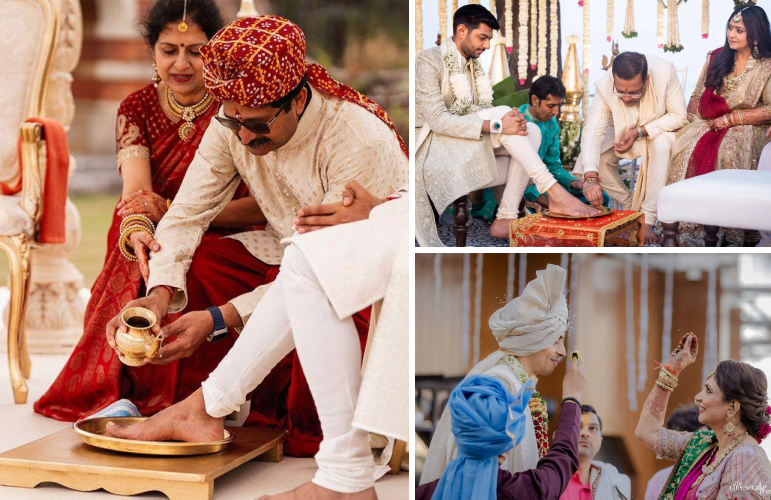
During Ponkhnu, the bride’s mother plays an important role by welcoming the groom to her family with an aarti while playfully pulling the groom’s nose.
Similarly, Madhuparka is a traditional ritual performed by the bride’s family to welcome the groom with a special traditional mix of honey, curd, and ghee. It is a symbolic representation of the bride’s family’s hospitality and feelings towards the groom and their acceptance of him as one of their own.
3. Jaimala and Antarpat: Exchange of Garlands and Sacred Cloth
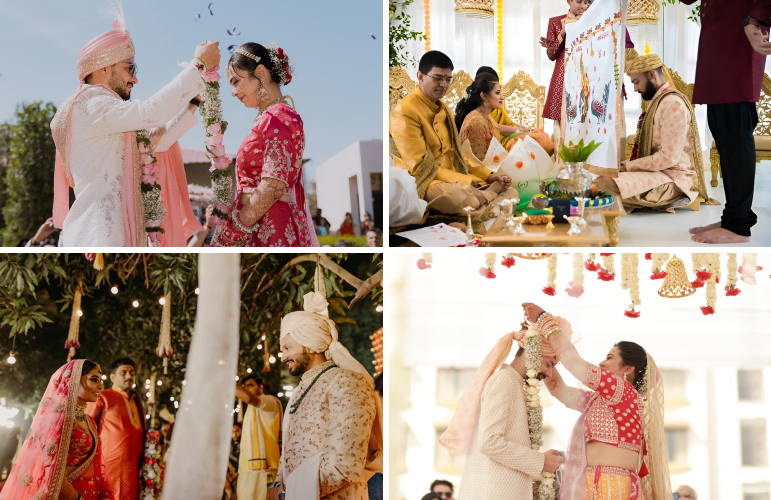
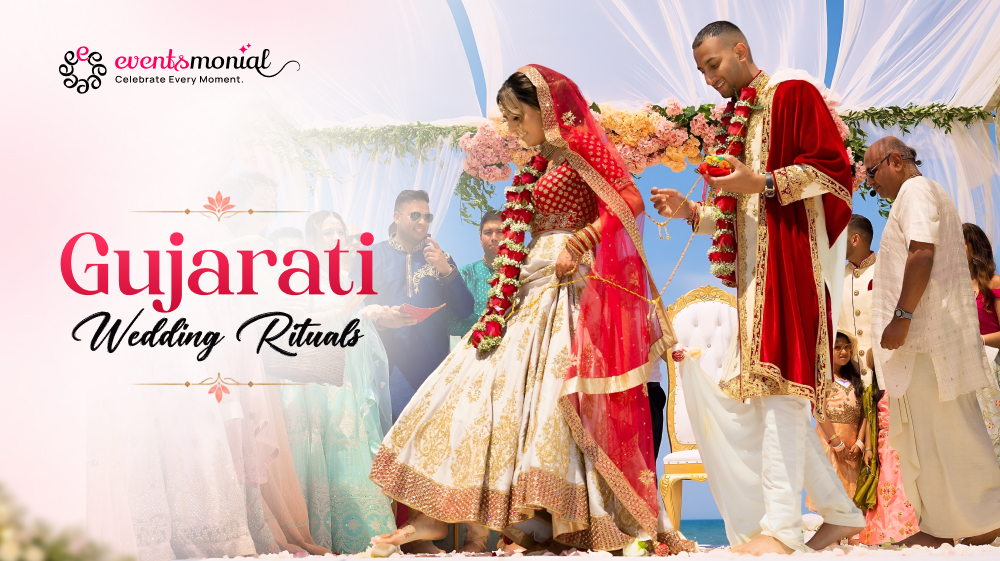
Jaimala is the ritual where the Gujrati bride and groom exchange floral garlands, symbolising their love and acceptance of each other. In Antarpat, a cloth separates the bride and groom until the priest lowers it during the wedding rites.
This is a significant and memorable ritual for the families and is always a highlight for photographers.
4. Kanyadaan and Hasta Melap: Parents’ Blessing and Joining of Hands
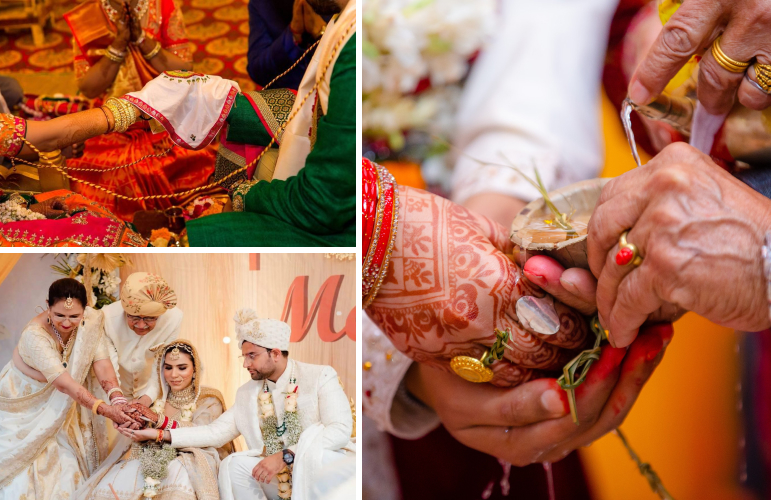
Kanyadaan is a sacred ritual performed by the bride’s parents. Its significance depends on the family’s traditions, but it symbolises the parents’ blessing for their daughter and their wish for a happy married life. During Hasta Melap, the couple’s hands are joined in front of the priest while exchanging a sacred thread, signifying the unity between the two families.
5. Mangal Pheras: Sacred Vows Around the Sacred Fire
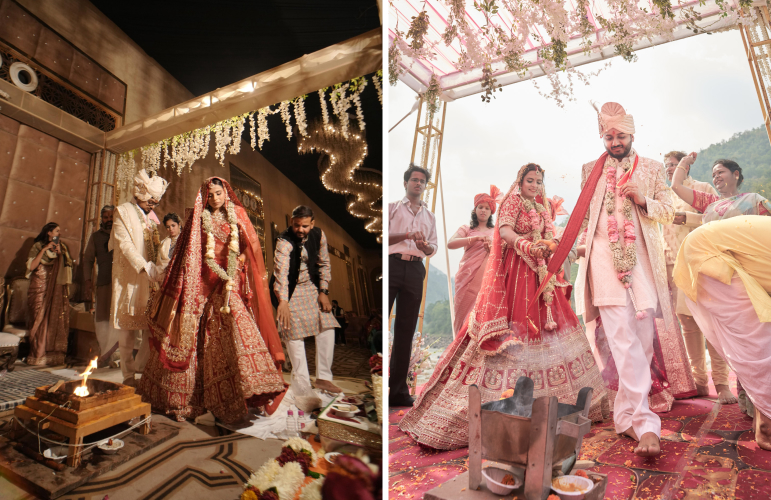
The most sacred Gujarati wedding ritual is the Mangal Pheras, where the bride and groom take sacred vows around the holy fire. As per tradition, the couple takes four rounds facing west, and during each round, the priest reminds them of their duties towards each other, marriage, and family.
While the significance of this ritual might be family-specific, it is an essential part of the Gujarati wedding that symbolises the promise of love and togetherness.
6. Sindoor, Mangalsutra, and Kansar: Blessings of Marriage
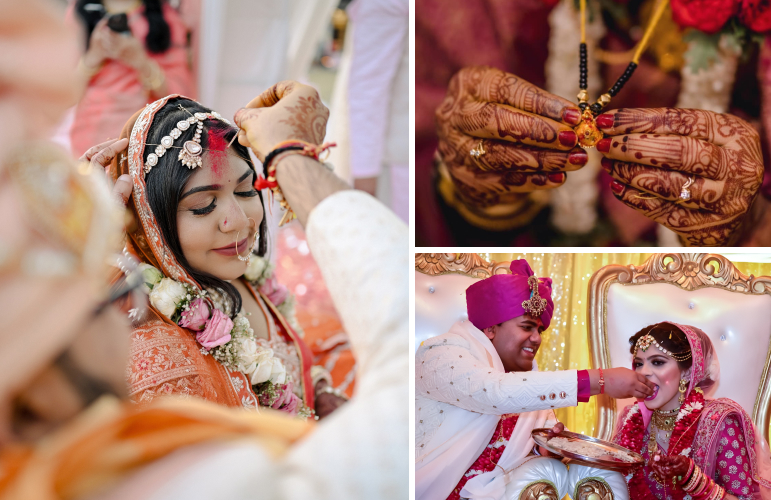
As per the family’s traditions, the groom puts sindoor and a mangalsutra on the bride’s head and neck. Kansar is a traditional sweet preparation, and the couple shares it in a symbolic representation of their loving and happy married life.
What Are the Post-Wedding Rituals and Celebrations After a Gujarat Wedding Ceremony?
The post-wedding events mark the end of the wedding celebrations and welcome the bride to her marital home. The most important custom is Vidaai, a farewell ceremony where the bride’s family bids her an emotional goodbye. The bride leaves her childhood home, and this ceremony signifies the beginning of her new life as a married woman.
Griha Pravesh is another noteworthy traditional Gujarati wedding custom performed upon the bride’s arrival at her marital home. Traditionally, the bride’s parents perform aarti and tilak to welcome her, and she gently pushes a pot of rice with her right foot as a symbol of prosperity and abundance.
What Are the Unique Ways to Plan a Traditional Gujarati Wedding Ceremony Program?
With so many events and rituals to witness and participate in, a well-planned Gujarati wedding ceremony program will help guests experience the true spirit of the celebration. It will also help the families and the bride and groom to stay on track with the schedule and ensure all arrangements, from food and music to priest coordination and photography, are perfect on the big day. Here is how you can create a sample wedding program:
- Day 1: Chandlo Matli or engagement, if applicable.
- Day 2: Mehendi, Mameru or family gathering, as per traditions.
- Day 3: Mandap Mahurat, Griha Shanti, and other traditional Gujarati wedding rituals.
- Day 4: Varghodo (Groom’s procession), Ponkhnu and Madhuparka, Jaimala, sacred wedding rites, and Vidaai ceremony.
- Post-wedding events: Griha Pravesh (bride’s entry into marital home) and Reception, as planned by the families.
This is a tentative ceremony program, and the number of days or events might differ as per the families’ customs and convenience.
Moreover, a proper checklist will help plan each part of the Gujarati wedding perfectly. Some essential elements of a Gujarati wedding checklist include:
- Ceremonies, priest coordination, venue decoration, and seating arrangement.
- Sarees, jewellery, and other traditional attires for the wedding.
- Special Gujarati delicacies and cuisines like dhokla, khandvi, undhiyu, shrikhand, mohanthal, etc.
- Vehicle and hotel booking for guests, along with photography, music, Garba, and invitations.
Couples can leverage modern technology and apps like EventsMonial, a wedding planner app, to explore ways to plan their Gujarati wedding and ensure all important aspects are covered.
How Can Modern Couples Maintain Gujarati Wedding Traditions?
The modern world has allowed couples to blend various cultures and traditions to create new wedding rituals that are unique to them. However, it is essential to acknowledge the importance of a traditional Gujarati wedding and maintain its unique customs and values.
Here are some ways a couple can ensure their wedding resonates with the true spirit of a Gujarati wedding:
- Tell stories of family members and rituals and pass on their significance to younger generations.
- Follow regional traditions that resonate with you and showcase them as a part of your wedding culture.
- Create a memorable Garba night for guests by including traditional music and dance in your event.
- Use traditional décor, torans, flowers, and colours to create a unique Gujarati wedding theme.
- Personalise the Gujarati wedding to suit your needs and highlight your family’s blessings and cultural performance.
- Plan your event to ensure your guests understand the meaning and significance of each Gujarati wedding tradition.
The most memorable celebrations are the ones where the couple can maintain their cultural roots and showcase it as a part of their unique wedding.
Conclusion: Celebrate the True Essence of Gujarati Wedding Rituals
A Gujarati wedding beautifully captures the Gujarati culture and traditions of spirituality, family bonding, joy, and celebrations. The numerous customs and rituals of a Gujarati wedding are a mark of a rich and fulfilling life ahead for the couple. From Gol Dhana and Mameru to Mangal Pheras and Vidaai, every Gujarati wedding ritual has a unique significance that is dear to the hearts of families.
By understanding and maintaining the true essence of Gujarati wedding rituals step-by-step, a couple can create a memorable wedding that resonates with their heritage while also creating lasting memories for their families.
Gujarati wedding traditions, spiritual blessings, and delectable delicacies create a celebration that is unforgettable for everyone. At EventsMonial, our team works closely with couples to provide wedding planning assistance and help them create a Gujarati wedding that they will cherish forever.