Explore the traditions, meanings, and ceremonies behind Telugu wedding rituals, along with essential wedding planning tips.
It is said that when the divine energies of Lord Vishnu and Goddess Lakshmi reside together, it signifies a Telugu wedding.
The bond formed on this day goes beyond the amalgamation of two souls. A Telugu wedding ceremony initiates the sacred relationship between the families of the couple. On the journey of this coronation lie the pits of many rituals. It starts before the event occurs and continues until the two individuals knit themselves together to become one.
There can be multiple reasons you are searching for a Telugu wedding ceremony program, but it’s no coincidence that you landed here. This piece of advice is all you need to understand Telugu wedding rituals.
The rituals follow a long checklist to establish harmony between the two newlyweds. But before we dig into what these rituals entail, here is a glimpse of what is a traditional wedding ceremony?
What Do Traditional Telugu Wedding Rituals Actually Mean?
When we talk about traditional Telugu wedding rituals, we have to understand that these rituals are deeply rooted in meaning, timing, and family blessings. These spiritual rituals of a Telugu wedding give it a special identity rooted in South Indian culture.
Wedding rituals are not something we can always explain through logic. Instead, they connect with emotions and centuries-old traditions that people perceive as good omens for beginning relationships built on promises.
So, the answer to the question of what is a traditional wedding ceremony cannot be understood in a jiffy. First, we have to know when these ceremonies are held and why each particular ritual is performed.
The Rituals of Telugu Wedding
If we have to break down the rituals of Telugu wedding, we need to divide them into three major parts: pre-wedding rituals, rituals on the wedding day, and post-wedding rituals. So, let’s start from the start.
Telugu Pre-Wedding Rituals
Engagement Ceremony
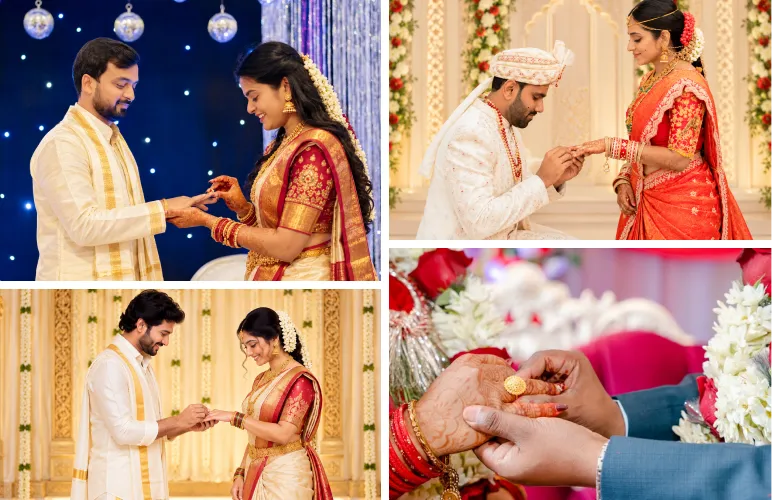
Also known as Nischitartham, this is where it all starts. It begins with recognising the couple as a match, after which the families of both the bride and groom come together for the Nischitartham ceremony.
Originally, this Telugu wedding ceremony program is held to pray for the welfare and prosperity of the bride. Only after this event can the wedding preparations officially begin.
Muhurtham Ceremony
While the prayers for the bride take place, the astrologers present during the Telugu wedding ceremony program start advising the families to choose an auspicious time for the wedding.
During this crucial phase, the horoscopes of both the bride and groom are carefully studied by the Brahmins, and an official date and time for the wedding are fixed.
Pelli Kanuka
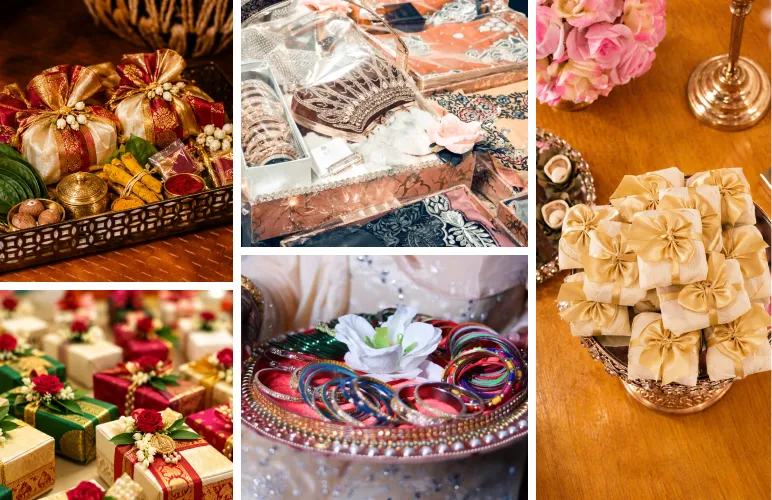
Following the announcement of the wedding date and the Nischitartham ceremony, the bride’s family begins performing special pujas at their home. During these pujas, Goddess Gauri is primarily worshipped.
The intention behind these rituals is to seek Goddess Gauri’s blessings for purity, divine femininity, prosperity, and the nurturing aspects of motherhood for the bride.
After going through all the prayers guided by the elders and priests, the Telugu wedding ceremony starts to take shape.
Telugu Wedding Day Rituals
Ganesh Puja
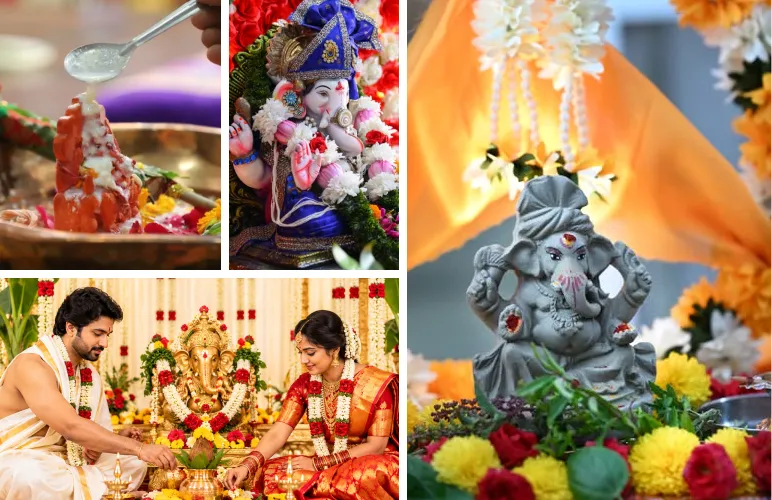
On the day of the wedding, the remover of all obstacles, Lord Ganesha himself, is worshipped first. The priest performs the puja and offers Lord Ganesha flowers, coconuts, turmeric, and other offerings while chanting mantras and praying for the prosperity of the ongoing event.
The reason behind this ritual is to safeguard the couple from any evil, ensuring that all the interruptions that might await this Telugu wedding ceremony program shall turn around.
Kashi Yatra
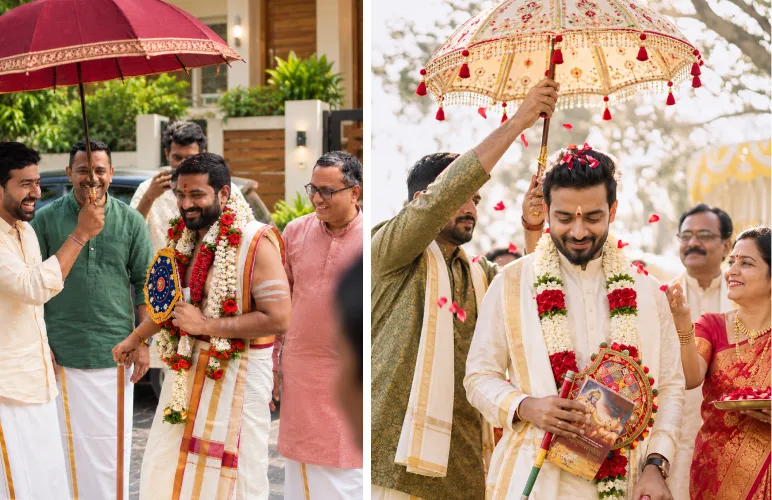
Next comes a ritual that involves the two important male figures in a bride’s life. This ritual is more of a skit in which the groom-to-be decides to leave all worldly things behind and set off on his spiritual journey to Kashi. While he prepares to leave, the father of the bride reminds the groom of his responsibilities in this world.
The reason behind this skit or ritual is to symbolise that married life is sacred and that one should approach marriage not as an obligation but as a responsibility.
Jeelakarra Bellam
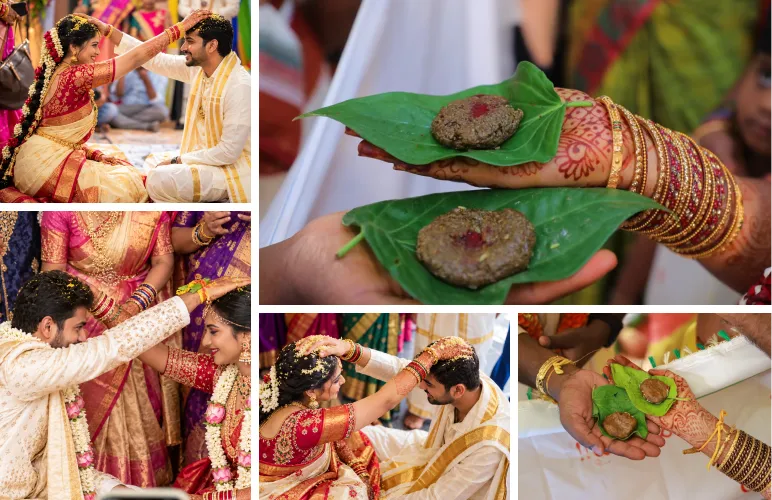
At the exact moment of the Muhurtham (the auspicious time), this Telugu wedding ritual is performed. Jeelakarra means cumin, and Bellam translates to jaggery, both of which are the crucial ingredients of this ritual.
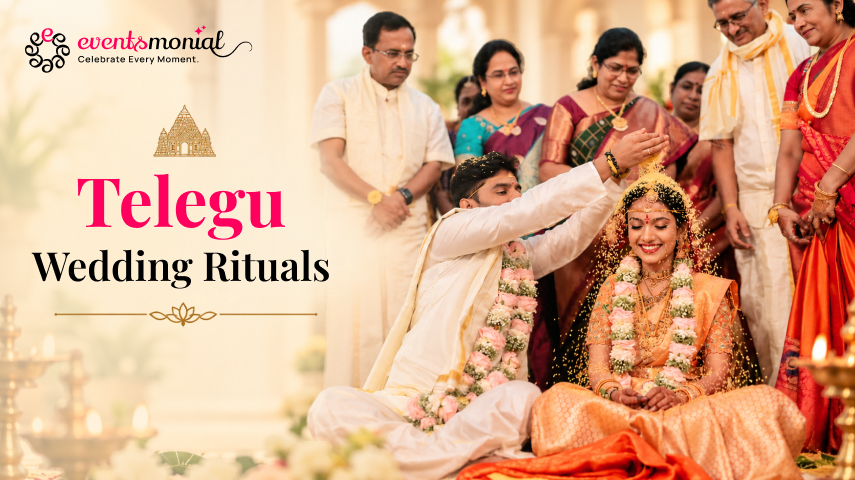
What happens in this Telugu wedding ritual is that the cumin and jaggery are ground into a paste, which is then placed on the heads of both the bride and groom at the exact same time.
The reason why Jeelakarra Bellam is considered one of the most iconic rituals of a Telugu wedding is that, according to old traditions, cumin symbolises strength, while jaggery represents the sweetness that the couple needs to carry in this holy bond for the rest of their lives.
Kanyadaanam
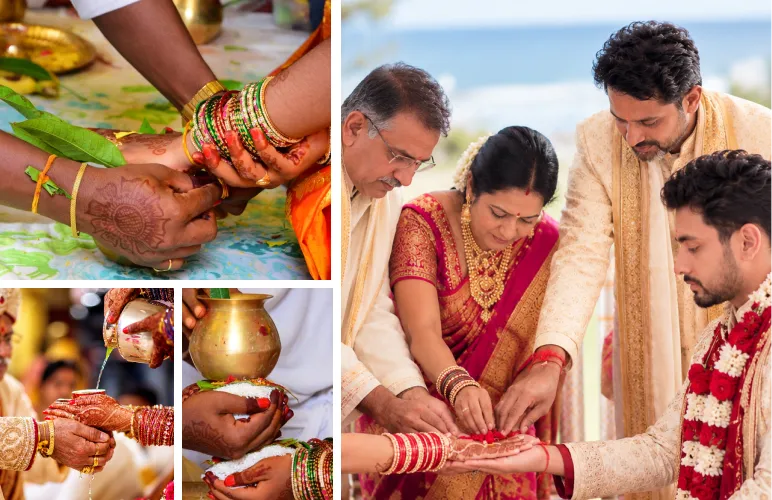
After all the major pujas, the bride’s maternal uncles carry her in a bamboo basket to the mandap. Then come the final moments when the bride’s father, keeping his heart strong, officially places his little princess’s hands into those of her future guardian. In the midst of this emotional ritual, the priest chants sacred mantras, asking the gods to bless the couple.
This particular ritual holds a deeper meaning in Telugu wedding ceremony than it seems. Giving his daughter’s hand to another man can be quite emotional. The groom must win a father’s trust, by pledging to support his daughter in matters of Dharma, Artha, and Kama.
Mangalsutra Dharana
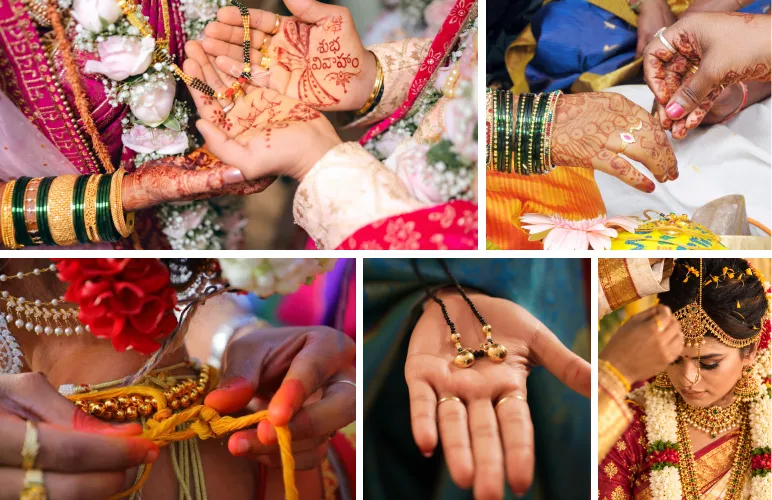
Mangalsutra Dharana is what we all know as the tying of the mangalsutra around the bride’s neck. While the surroundings fill with the chants of mantras and blessings, the sounds of loud celebrations, and the cheers of family members.
Tying the mangalsutra is one of the most sacred rituals of Telugu wedding, symbolising the groom’s lifelong commitment to the bride and the assurance that their relationship will last a lifetime.
Talambralu
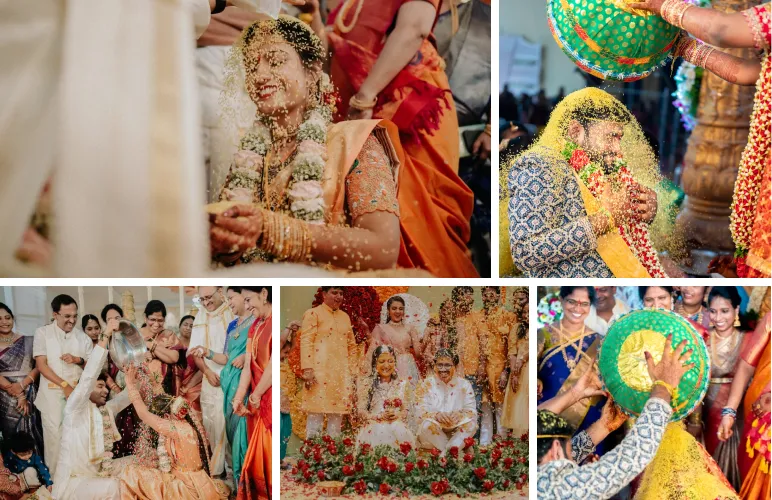
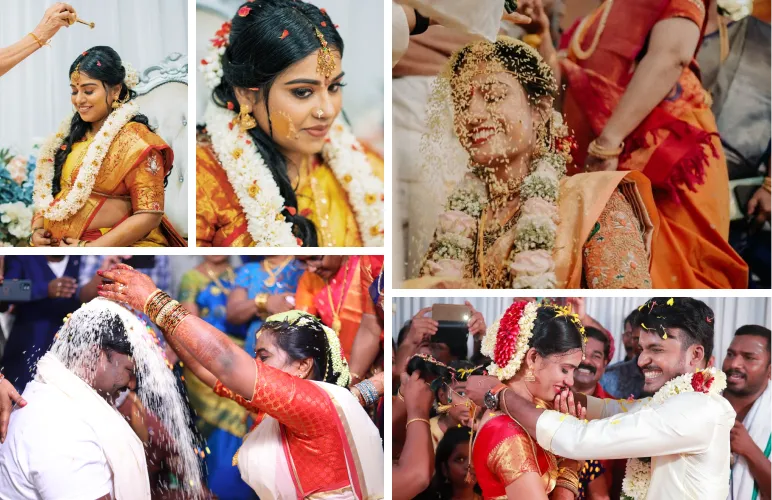
This is also famously known as the Telugu wedding rice ritual. Stepping into the joyful part of the wedding ceremony, the bride and groom playfully shower each other with rice mixed with turmeric pearls. Not once, but multiple times, they repeat this process while the priest chants slokas in the background.
The reason behind this Telugu wedding ritual is to invite prosperity, happiness, and blessings for the couple’s well-being in their married life.
Saptapadi / Seven Steps
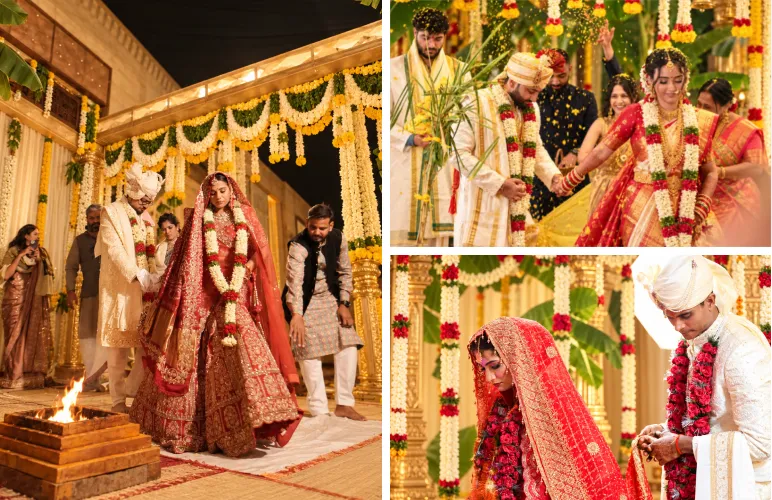
Common in most traditional Hindu weddings in India, Saptapadi is also commonly known as the “Saat Phere.” Both the bride and groom hold hands and, as the priest begins chanting mantras, take seven sacred steps together around the mandap.
The pallu of the bride’s sari is tied to one end of the groom’s scarf.
The seven steps represent a promise that the couple will remain together for seven lifetimes.
From here on, marriage is no longer just about rituals; it becomes the permanence of love, friendship, and support.
Arundhati Nakshatram Darshanam
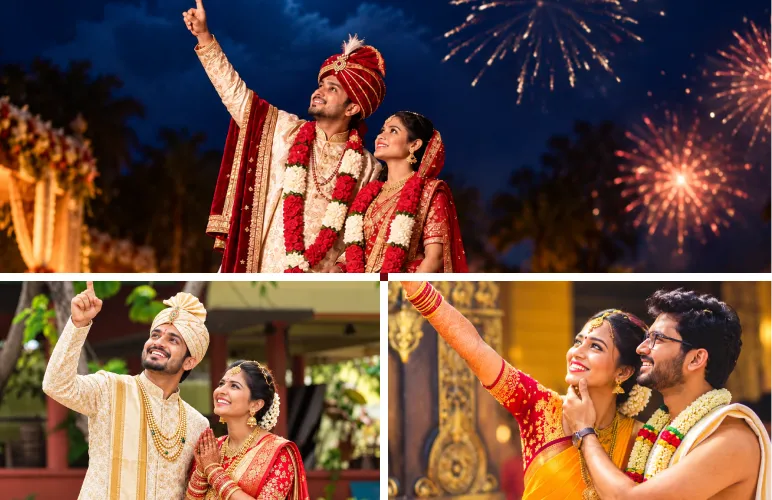
The newlywed bride and groom now turn to the elders of their families for wisdom. The elders then direct the couple towards the Arundhati star, which is traditionally associated with the star Alcor in the constellation Ursa Major.
Under the layers of this Telugu wedding ritual lies a teaching:
One should remain steady and strong together in tough times.
Telugu Post-Wedding Rituals
Appagintalu
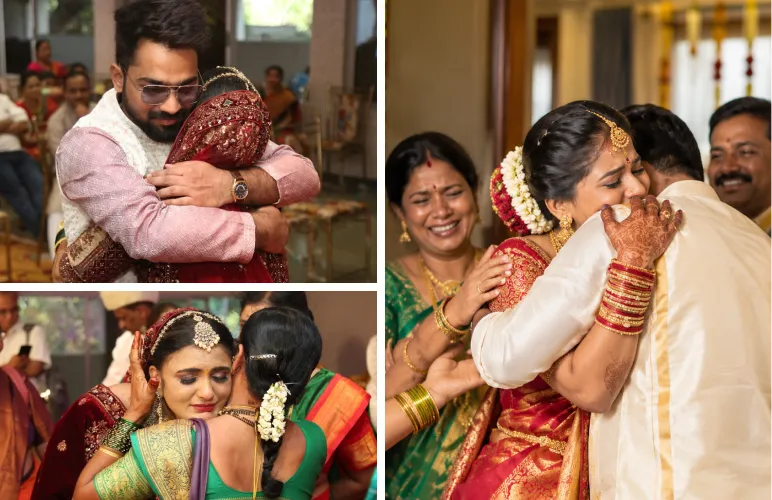
After the couple seeks blessings from the elders by touching their feet, the bride has to bid farewell to her parents and make another place her home. This can be one of the most emotionally driven Telugu wedding ceremony steps. The pride and emotional pain of separation move all the family members to say goodbye with teary eyes and emotional hugs.
No version of this wedding ritual is less painful. It is a moment of fulfilling destiny.
The deep significance of this ritual lies in the bond between the bride and her parents. From this moment on, the bride’s life and family experiences change forever.
Grihapravesham
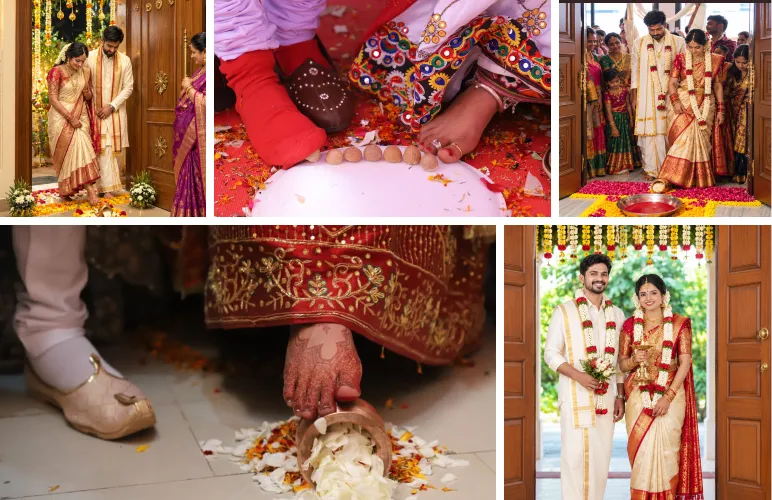
On the same day, or sometimes the next day, the bride arrives at the groom’s house. This is her first time entering her new home. A warm welcome with aarti at the doorstep is how the bride is received. Prayers for prosperity and peace following her arrival can be heard all around.
But before she steps inside, a pot full of raw rice is placed in front of her right foot. It is said that when a new bride enters the house, she becomes Goddess Lakshmi herself.
This final Telugu wedding ritual welcomes the new member of the family with warmth and a sense of acceptance.
Engaged Already? It’s Time to Get Those Bookings Done
Getting married with Indian Hindu traditions can get quite overwhelming. There is a long list of rituals to follow throughout the wedding ceremony program. Not only can the process be complex in its own way, but organising all these events can also get a little costly.
But these are the moments that may last only for seconds yet remain in everyone’s hearts forever.
So, it’s better to plan ahead if a wedding is coming up in your family.
Are you reading this after your engagement? Then you might already be running late. This is not the time to figure out how do wedding ceremonies work, but to start booking your bridal makeup artist, event planners, and wedding photographers today. It’s better to stay a little ahead of the curve.
It is going to be a long process, and you will need help. That is why it is important to hire the right people for your wedding day. You can check out EventMonial to connect with top artists, photographers, and event planners in the industry. The platform can also help you sort out and design your wedding invitations and digital cards.
You may find the right person for the job after several long discussions, but with EventMonial, at least you can get started somewhere.
Let’s Conclude This
Indian weddings are complex and divine in themselves. Take any region’s wedding rituals, and each has a different history, yet they all point towards one divine thing: a blessing. A blessing for the newlyweds that, through laughter and tears, pride and shame, happiness and grief, they will remain together and face every problem as one. Every Telugu wedding ritual wraps this vow of fidelity in the love of family and friends.
It’s important to capture all these moments, so don’t forget to book your planners and photographers from EventsMonial, ahead of the wedding day.
May the love and trust between every newlywed couple last forever and ever.
Frequently Asked Questions
What Are the Telugu Pre-Wedding Rituals?
–The list of main Telugu pre-wedding rituals includes:
- Nischitartham: The official engagement ceremony.
- Muhurtham: The auspicious time of the wedding is determined.
- Pelli Kanuka: Gifts from the groom, bride, and their families, exchanged or presented according to family customs.
What Is the Significance of Muhurtham in Telugu Marriage?
+Muhurtham is defined as the auspicious time to perform the wedding ceremony. Usually, the families of the bride and groom consult an astrologer or priest and determine a suitable time believed to bring happiness and prosperity to the couple. Muhurtham holds a crucial role in the Telugu wedding ceremony steps.
What Is Jeelakarra Bellam in a Telugu Wedding?
+One of the major Telugu wedding rituals is Jeelakarra Bellam, which involves cumin and jaggery. During the auspicious time of the wedding, the bride and groom place a paste made from cumin and jaggery on each other’s heads. This lovely ritual of Telugu wedding symbolises the strong bond between husband and wife and their commitment to remain united.
What Is Kanyadaanam in Telugu Marriage?
+Kanyadaanam is the act of the bride’s parents formally entrusting their daughter to the marriage, expressing their wishes and blessings for the couple. It is a way for the family to bless and accept the marriage, and a key part of understanding what is a traditional wedding ceremony in Telugu Hindu traditions.